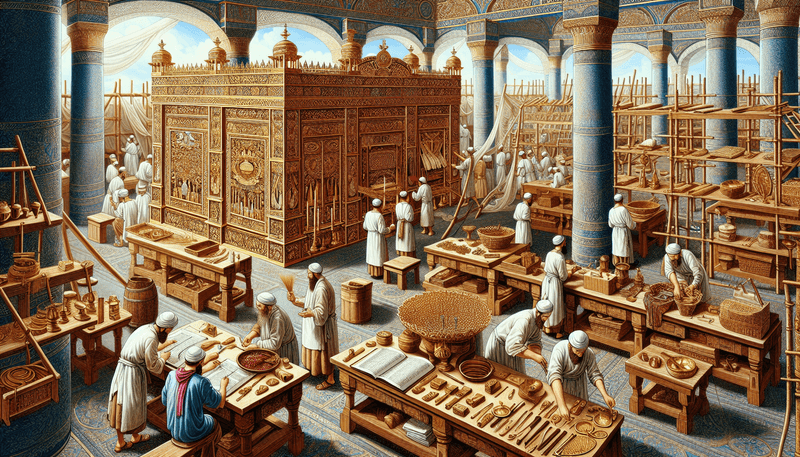
This week's Torah portion, Parashat Pekudei, marks the conclusion of the Book of Exodus. It details the completion and accounting of the Tabernacle, a portable dwelling place for the Divine presence among the Israelites during their desert wanderings. This Parasha is not only a testament to the Israelites' devotion but also a reflection on leadership, accountability, and the sanctity of communal efforts.
Parashat Pekudei opens with Moses accounting for all the materials collected for the Tabernacle, ensuring transparency and integrity in the use of communal contributions. This act of meticulous record-keeping highlights the importance of accountability in leadership. The detailed inventory serves as a model for ethical governance, emphasizing that leaders are stewards of the public's trust and resources.
The assembly of the Tabernacle is a momentous occasion, symbolizing the culmination of the Israelites' efforts to create a holy space for God's presence. The narrative meticulously describes the erection of the structure, the placement of the Ark of the Covenant, and the positioning of various sacred vessels and garments. This attention to detail underscores the significance of each component in facilitating a connection between the divine and the mundane.
One of the most striking aspects of Parashat Pekudei is the cloud covering the Tent of Meeting and the glory of the Lord filling the Tabernacle. This divine manifestation affirms God's presence among the people and serves as a guiding force during their journey. The cloud and fire, appearing by day and night, respectively, symbolize continuous divine guidance and protection.
In conclusion, Parashat Pekudei offers profound insights into the themes of leadership, community, and the sacred. It reminds us of the importance of accountability, the sanctity of communal endeavors, and the ever-present guidance and protection of the Divine. As we reflect on this Parasha, let us consider the ways in which these timeless principles can inform our own lives and communities.