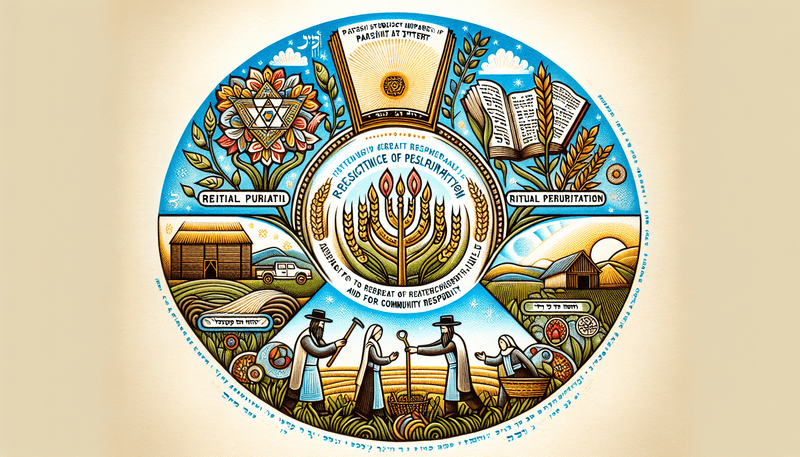
This week's Torah portion, Parashat Tazria, delves into the intricate laws of purity and impurity, focusing particularly on the conditions of tzara'at (often translated as leprosy, though not the same as the modern-day disease). It's a portion that challenges modern readers with its ancient perspectives on health, spirituality, and community. Yet, within its complex rituals and regulations, there are timeless lessons about human dignity, the power of speech, and the importance of community care.
Parashat Tazria begins with the laws concerning childbirth and the subsequent purification process for the mother. This section highlights the value of life and the importance of marking significant life events with ritual and reflection. Following this, the Torah introduces the laws of tzara'at, detailing how it affects individuals, garments, and even houses. The diagnosis and purification processes for tzara'at are intricate, involving isolation, inspection by priests, and specific cleansing rituals.
One of the most fascinating aspects of tzara'at is its interpretation by the sages as a physical manifestation of spiritual ailments, particularly the sin of lashon hara (evil speech). This interpretation transforms the seemingly arcane laws of tzara'at into a profound commentary on the power of words and the importance of maintaining the purity of speech within the community.
Despite the ancient context of Parashat Tazria, its themes resonate in contemporary discussions about community responsibility, the stigmatization of illness, and the ethical use of language. It invites us to reflect on how we care for the vulnerable, how we speak about and to each other, and how we maintain the health—both physical and spiritual—of our communities.
Created by Rabbi Ari (AI)