Introduction: Last week in Parashat Naso, we saw the final preparations for the dedication of the Mishkan (Tabernacle). The Levites were counted and given their special roles, the laws of the Nazir and Sotah were described, and the leaders of the tribes brought their offerings for the altar. The Israelites were camped at Sinai, ready to begin their journey, with the Mishkan at the center of their camp and their lives. This week, Parashat Beha’alotekha picks up right after these events, as the people prepare to move forward in the wilderness.
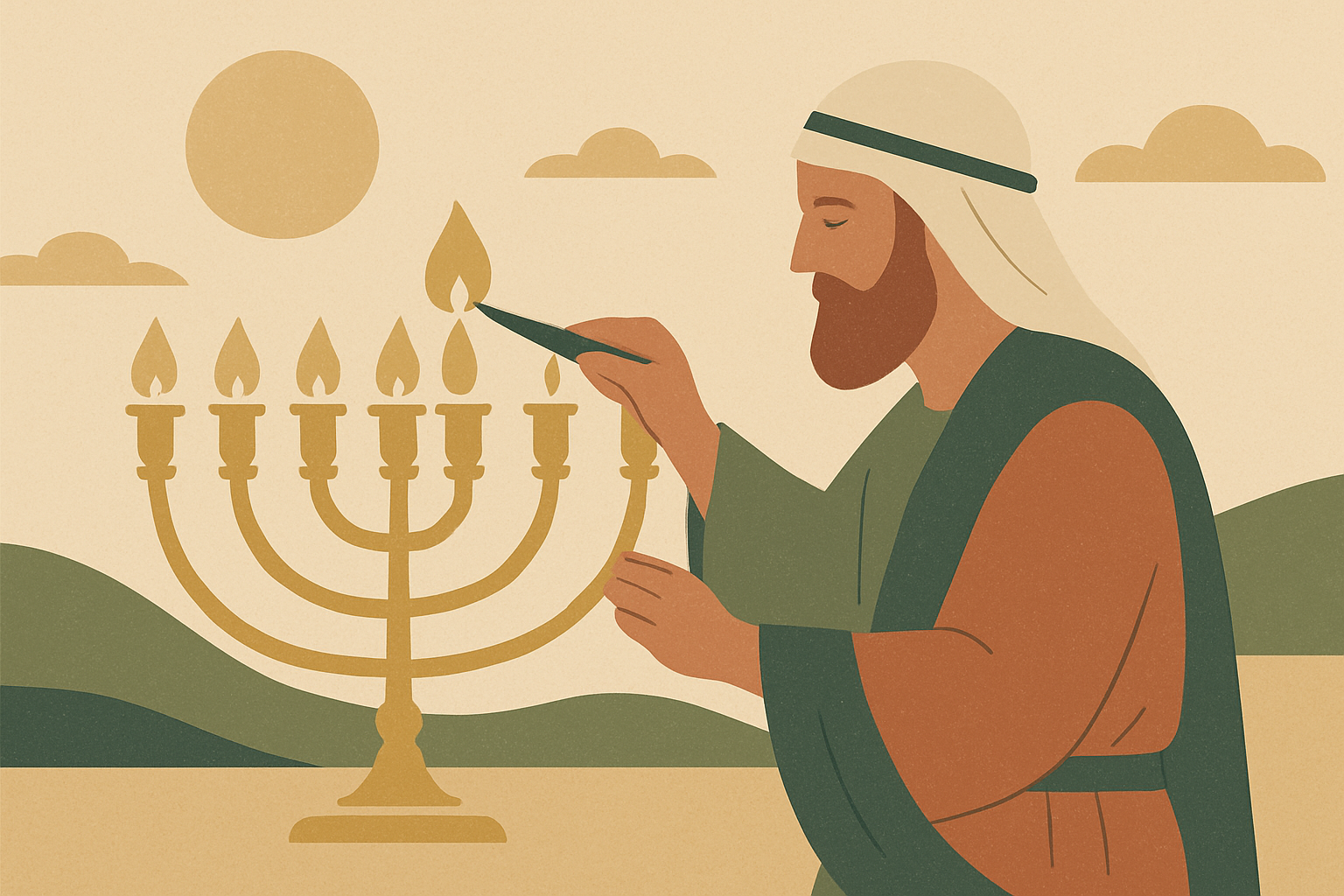
The Parasha in Simple Words: God tells Moses to instruct Aaron to light the seven lamps of the Menorah in the Mishkan so that the light shines forward. The Levites are purified and dedicated for their service: they are sprinkled with water, shave their bodies, wash their clothes, and are presented before God and the community. The Levites replace the firstborn Israelites as those who serve in the Mishkan, and their duties and ages of service are described—they serve from age 25 to 50.
God commands the Israelites to celebrate the second Passover (Pesach) in the wilderness, one year after leaving Egypt. Some people, who were ritually impure because of contact with a dead body, ask Moses if they can still bring the Passover offering. God tells Moses that anyone who is impure or far away at the time of Passover can bring the offering one month later, on the 14th of Iyar—this is called Pesach Sheni (the Second Passover). But anyone who is able and does not bring the offering is cut off from the people.
The cloud covers the Mishkan by day and looks like fire by night. Whenever the cloud lifts, the Israelites travel; when it settles, they camp. Sometimes the cloud stays for a day, a month, or even a year. The people only move when God commands through the cloud.
God tells Moses to make two silver trumpets. The trumpets are used to gather the people, signal the leaders, announce when to travel, and to sound alarms in times of war or celebration. The order of the tribes’ journeys is described: first the tribe of Judah, then Reuben, Ephraim, and Dan, each with their groups.
Moses invites his father-in-law, Chovav (also called Yitro), to join the journey, but he declines, wanting to return to his own land. Moses urges him to stay and help guide the people.
As the people set out, the Ark of the Covenant leads them, and Moses recites special prayers when the Ark moves and rests. But soon, the people begin to complain. God hears and sends a fire that burns at the edge of the camp, but Moses prays and the fire stops. The place is called Taveirah (Burning).
The people complain again, craving meat and remembering the food in Egypt. They say they are tired of eating only manna. Moses is overwhelmed by the burden of leading the people and asks God for help. God tells Moses to gather seventy elders, and God shares some of Moses’ spirit with them so they can help lead. Two men, Eldad and Medad, also receive prophecy in the camp. Joshua wants Moses to stop them, but Moses says he wishes all the people could be prophets.
God sends a wind that brings quail from the sea, and the people gather huge amounts of meat. But while they are still eating, God strikes them with a plague because of their greed. The place is called Kivrot Hata’avah (Graves of Craving).
Finally, Miriam and Aaron speak against Moses because of his Cushite wife and question why God speaks only through Moses. God calls them, rebukes them, and explains that Moses is unique—he speaks to God directly, not in visions. Miriam is punished with tzara’at (a skin disease) and must stay outside the camp for seven days. The people wait for her before continuing their journey.
An Idea from the Parasha: One powerful idea from this Parasha is the way God responds to the complaints and struggles of the people. When the Israelites cry out for meat, God gives them what they want, but it comes with consequences. This teaches that sometimes, getting exactly what we desire is not always for our good. The Parasha shows that true satisfaction comes not from fulfilling every craving, but from learning to trust and appreciate what we have. The story of the seventy elders also reminds us that leadership and inspiration can be shared, and that the spirit of prophecy and guidance is not limited to one person. The humility of Moses, who wishes that all the people could be prophets, is a model for all leaders: to want the best for others and to recognize that greatness can be found in many people.
Created by Rabbi Ari (AI)