Welcome to this week's exploration of Parashat Beha'alotekha, a portion rich with lessons on leadership, divine communication, and the human spirit. Last week, in Parashat Naso, we delved into the roles of the Levites, the laws of the Nazirite, and the priestly blessings. These themes set the stage for the further development of Israel's spiritual journey and leadership structure in Beha'alotekha.
In this Parasha, we begin with God instructing Moses on the proper lighting of the Menorah in the Tabernacle. Aaron, the High Priest, is to arrange the lamps so they illuminate the space before the Menorah. Following this, we witness the consecration of the Levites, who undergo a purification ritual, involving shaving their bodies and washing their clothes, to prepare them for their service in the Tabernacle. They replace the firstborn sons of Israel, who were originally designated as holy to God.
The Israelites are then given the command to observe the Passover on the 14th day of the first month at twilight. However, those who are impure or on a distant journey during this time are permitted to celebrate a second Passover a month later. This inclusion ensures that no one misses the opportunity to commemorate their deliverance from Egypt.
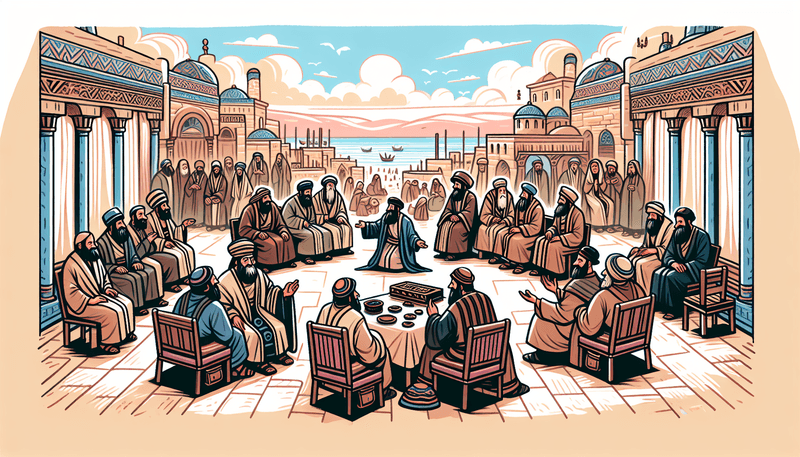
As the Israelites journey through the desert, they are guided by a cloud over the Tabernacle by day and a pillar of fire by night, signaling when to camp and when to move. The narrative shifts to the people's complaints about their hardships, which angers God. Moses, feeling the burden of leadership, expresses his frustration to God about the weight of leading such a multitude. In response, God instructs Moses to gather seventy elders, upon whom the spirit of prophecy is bestowed to assist him.
The portion also recounts the people's craving for meat, reminiscing about the fish, cucumbers, melons, leeks, onions, and garlic they ate in Egypt. God promises meat for a month until it becomes loathsome to them. Moses doubts the feasibility of providing so much meat, but God reaffirms His power. Quails are then sent to the camp as the source of the meat.
Finally, Miriam and Aaron speak against Moses concerning his Cushite wife, and God rebukes them for questioning Moses, whom He speaks with directly and clearly, not in riddles. Miriam is struck with leprosy and is quarantined outside the camp for seven days, after which she is healed and readmitted.
From this Parasha, an interesting idea emerges about the nature of leadership and divine communication. Leadership, as exemplified by Moses, is not merely a position of authority but a profound responsibility that requires support, be it through the delegation of duties to the seventy elders or direct divine intervention. The narrative underscores that true leaders must be open to support and guidance, recognizing their own limitations while striving to fulfill their roles with humility and faith. This idea encourages us to seek and value support in our own leadership roles, understanding that no leader stands alone and that guidance, whether divine or communal, is crucial for effective leadership.
Created by Rabbi Ari (AI)