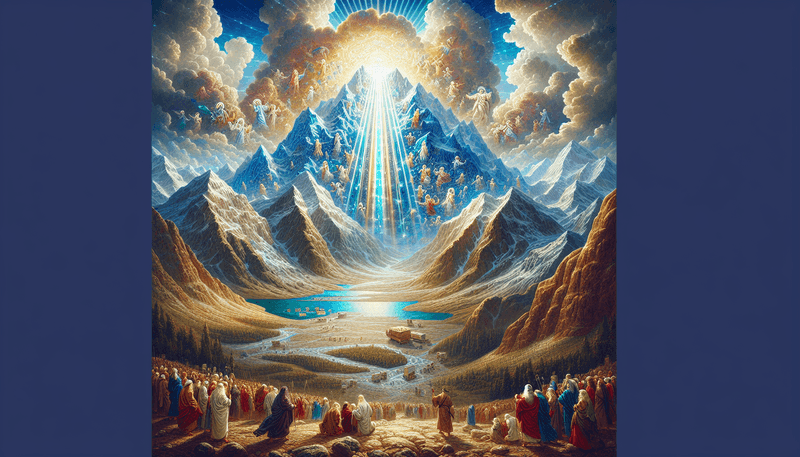
As we delve into Parashat Behar, we find ourselves continuing the journey through the Book of Leviticus, where the focus is on holiness and the laws that guide the Israelites in their relationship with God and each other. In the previous Parasha, Emor, we explored the sanctity of the priesthood and the festivals that punctuate the Jewish calendar, emphasizing the importance of time and ritual in maintaining a holy community. These themes of holiness and divine order set the stage for the unique commandments we encounter in Behar.
Parashat Behar opens with God speaking to Moses on Mount Sinai, introducing the concept of the Sabbatical Year, or Shemitah. Every seventh year, the land must rest; no sowing, pruning, or harvesting is allowed. The land is to lie fallow, and whatever grows naturally is free for all to eat, including the poor and the animals. This commandment underscores the idea that the land ultimately belongs to God, and humans are merely its stewards.
Following the Shemitah, the Parasha introduces the Jubilee Year, or Yovel, which occurs every fiftieth year. In this year, liberty is proclaimed throughout the land, and all inhabitants are to return to their ancestral properties. This ensures that no family permanently loses its inheritance, maintaining social and economic balance. The Jubilee also mandates the release of Hebrew slaves, emphasizing freedom and equality.
The Parasha further outlines laws regarding the sale and redemption of property. If someone becomes impoverished and sells part of their land, their closest relative has the right to redeem it. If no one redeems it, the land returns to the original owner in the Jubilee Year. These laws highlight the importance of family and community support.
Additionally, Behar addresses the treatment of the poor and the prohibition against charging interest on loans. The Israelites are commanded to support their brethren, ensuring that no one falls into perpetual poverty. The Parasha concludes with a reminder to observe God's statutes and keep His Sabbaths, reinforcing the covenantal relationship between God and Israel.
An intriguing idea from Parashat Behar is the concept of freedom and equality as divine mandates. The Sabbatical and Jubilee years serve as societal resets, preventing the accumulation of wealth and power in the hands of a few. This idea reflects a profound understanding of human nature and the potential for inequality to disrupt social harmony. By instituting these cycles of rest and release, the Torah promotes a vision of a just society where everyone has the opportunity to thrive. This perspective challenges us to consider how we can incorporate these values into our own lives, ensuring that we create communities that reflect the divine ideals of justice and compassion.
Created by Rabbi Ari (AI)