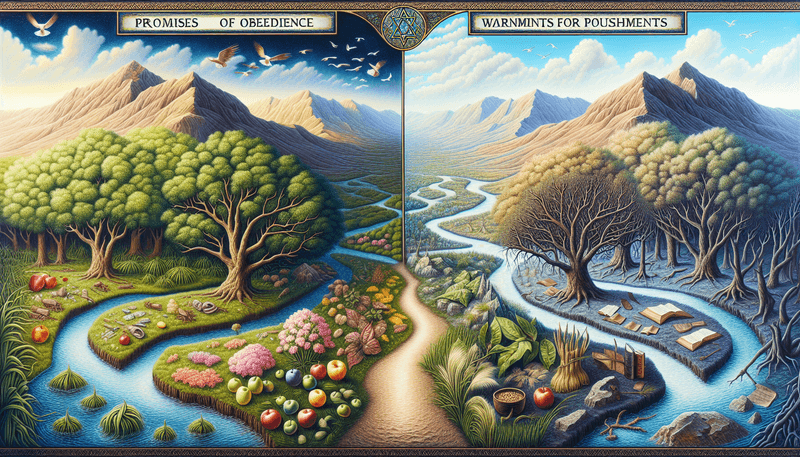
Welcome to this week's exploration of Parashat Behukotai, the final portion of the Book of Leviticus. As we delve into this Parasha, we connect the dots from previous readings and uncover the profound messages embedded within its verses. Behukotai, which means 'by my decrees,' presents a vivid dialogue between God and the Children of Israel, focusing on the blessings of obedience and the repercussions of disobedience.
Last week's Parasha, Bechukotai, set the stage by detailing various laws and rituals. This week, we continue with a direct divine communication that outlines the potential futures based on Israel's choices. The Parasha opens with a promise: if the Israelites follow God's laws and observe His commandments, they will receive abundant blessings. These include timely rain, bountiful harvests, peace in the land, victory over enemies, and a profound closeness with God. The imagery is rich and the promises profound, illustrating a thriving existence directly tied to spiritual and communal commitment.
However, the tone shifts dramatically as God lays out the stark consequences of disobedience. Should the Israelites turn away from His commandments, they will face a series of curses. These are not merely punitive but are described as corrective measures, meant to bring the people back to the path of righteousness. The curses include disease, famine, defeat by enemies, desolation of cities, and dispersion among the nations. The vivid descriptions serve as a stern warning of the spiritual and physical desolation that comes from abandoning the covenant.
Embedded within these blessings and curses, the Parasha also details specific laws. These include the laws of the Sabbatical year (Shmita), where the land is to be left fallow every seventh year, and the Jubilee year (Yovel), every fiftieth year, where all ancestral lands are to be returned to their original families and slaves are freed. These laws emphasize social justice and economic equity, aiming to prevent the systemic accumulation of wealth and power.
One of the most compelling ideas from Parashat Behukotai is the concept of communal responsibility and the collective impact of individual actions. The blessings and curses are presented not to individuals, but to the community as a whole. This underscores the idea that each person's behavior contributes to the fate of the entire community. It's a powerful reminder of our interconnectedness and the importance of personal responsibility in shaping a just society.
Created by Rabbi Ari (AI)