Last week, in Parashat Bo, we witnessed the dramatic conclusion of the ten plagues and the long-awaited moment when Pharaoh finally let the Israelites leave Egypt. The Israelites left in haste, carrying their unleavened dough, and God commanded them to remember this day with the festival of Passover. The Israelites left Egypt as a free people, but their journey was just beginning.
This week, in Parashat Beshalah, the story picks up as the Israelites set out from Egypt. God does not lead them by the shortest route, which would have taken them through the land of the Philistines, because He knows they might become afraid if they face war and want to return to Egypt. Instead, He leads them by a longer route through the wilderness toward the Red Sea. Moses takes Joseph’s bones with him, fulfilling the promise made to Joseph generations earlier. God goes before the people in a pillar of cloud by day and a pillar of fire by night, guiding them on their journey.
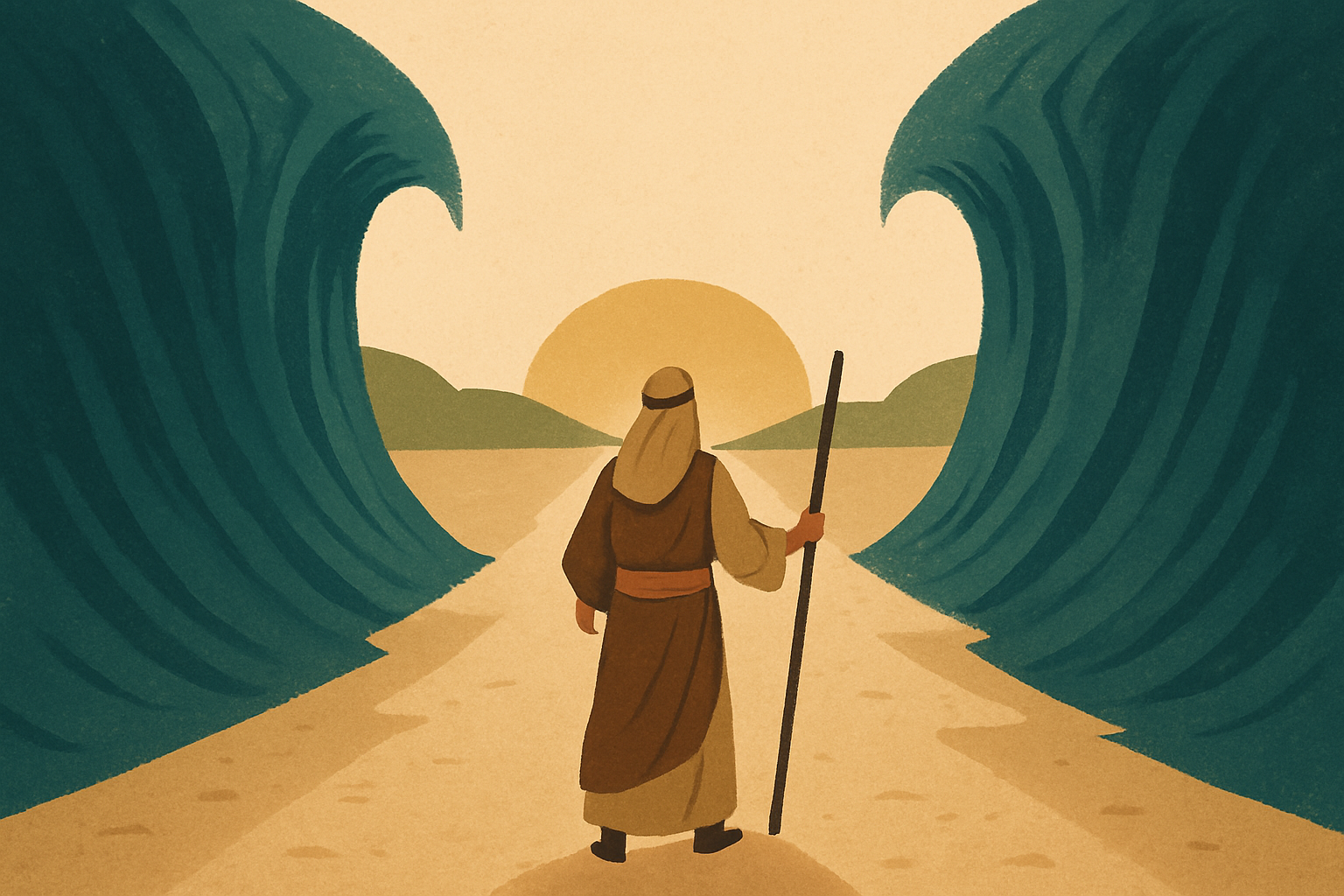
God tells Moses to have the Israelites camp by the sea, and He hardens Pharaoh’s heart once more. Pharaoh regrets letting the Israelites go and pursues them with his army. The Israelites see the Egyptians approaching and become terrified, crying out to God and complaining to Moses that they would have been better off as slaves in Egypt. Moses tells them not to be afraid and that God will fight for them. God instructs Moses to lift his staff over the sea, and God causes a strong east wind to blow all night, splitting the sea and creating dry land. The Israelites cross through the sea on dry ground, with walls of water on both sides. The Egyptians pursue them, but God causes their chariots to get stuck. When the Israelites have crossed, Moses stretches out his hand again, and the waters return, drowning the Egyptian army. The Israelites see the Egyptians dead on the shore and believe in God and in Moses.
Moses and the Israelites sing a song of praise to God, celebrating their deliverance and describing how God threw the horse and rider into the sea. Miriam, Moses’ sister, leads the women in song and dance with tambourines. The Israelites continue their journey into the wilderness of Shur. After three days without water, they arrive at Marah, but the water there is bitter. The people complain, and God shows Moses a piece of wood to throw into the water, making it sweet. God tells the people that if they listen to His commandments, He will protect them from the diseases of Egypt. They then come to Elim, where there are twelve springs and seventy palm trees, and they camp there.
Next, the Israelites enter the wilderness of Sin. The people complain about the lack of food, wishing they had died in Egypt where they had plenty to eat. God tells Moses that He will rain down bread from heaven, and the people are to gather it each day, but on the sixth day they are to gather double for Shabbat. In the evening, quail cover the camp, and in the morning, a layer of dew appears, leaving behind a fine, flaky substance. The people call it manna. Moses tells them to gather only what they need for each day, but some do not listen and try to save it for the next day, and it becomes infested with worms. On the sixth day, they gather double, and it does not spoil, as it is for Shabbat. Some people go out to gather on Shabbat, but find nothing. God tells Moses to remind the people that Shabbat is a day of rest. The Israelites eat manna for forty years, until they reach the land of Canaan. God commands Moses to save a jar of manna as a reminder for future generations.
As they continue, the people again complain about the lack of water at Rephidim. God tells Moses to strike a rock with his staff, and water comes out for the people to drink. The place is named Massah and Meribah because the people quarreled and tested God. Then, Amalek comes and attacks the Israelites. Moses tells Joshua to choose men to fight. During the battle, as long as Moses holds up his hands, the Israelites prevail; when he lowers them, Amalek prevails. Aaron and Hur support Moses’ hands until sunset, and Joshua defeats Amalek. God tells Moses to write this down as a reminder and says that He will be at war with Amalek for all generations.
One powerful idea from this Parasha is the way the Israelites are guided step by step, with God providing for their needs in miraculous ways, but also testing them to see if they will trust Him. The splitting of the sea, the manna, the water from the rock, and the battle with Amalek all show that the journey to freedom is not just about leaving Egypt, but about learning to rely on God and to develop faith and resilience. The challenges and miracles are intertwined, teaching that true freedom comes with responsibility and trust, and that faith is built through experience and perseverance, not just through dramatic moments of salvation.
Created by Rabbi Ari (AI)