As we delve into Parasha Bo, we find ourselves in the midst of a dramatic narrative that began in the previous Parasha, Va'era. The story of the Israelites' enslavement in Egypt continues, with Moses and Aaron confronting Pharaoh, demanding the release of the Israelites. Despite witnessing the first seven plagues, Pharaoh's heart remains hardened, setting the stage for the final, decisive plagues that will lead to the Israelites' liberation.
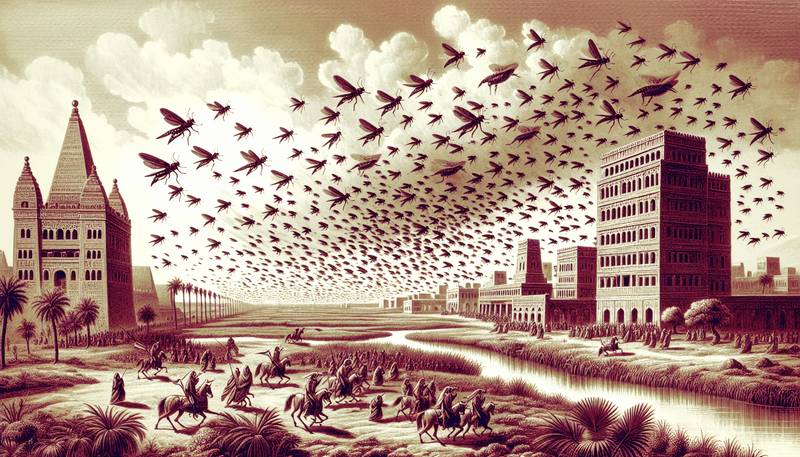
In Parasha Bo, the narrative picks up with the eighth plague, the plague of locusts. God instructs Moses to approach Pharaoh once more, warning him of the impending devastation. Despite the severe threat, Pharaoh's heart remains obstinate. The locusts descend upon Egypt, consuming every green thing left after the previous plagues. Pharaoh, in desperation, calls for Moses and Aaron, admitting his sin and pleading for relief. Yet, once the plague is lifted, his heart hardens again.
The ninth plague follows, a palpable darkness enveloping Egypt for three days. This darkness is so intense that the Egyptians cannot see one another or move from their places. However, the Israelites have light in their dwellings. Pharaoh summons Moses, offering to let the people go, but insists on keeping their livestock. Moses refuses, stating that they need their animals for sacrifices. Pharaoh, enraged, warns Moses never to see his face again, to which Moses agrees.
God then instructs Moses about the final plague, the death of the firstborn. Before this plague, the Israelites are given specific instructions for the Passover sacrifice. Each household is to take a lamb, slaughter it, and mark their doorposts with its blood. They are to eat the lamb roasted, with unleavened bread and bitter herbs, ready to leave Egypt in haste. This night is to be commemorated as Passover for generations to come.
At midnight, God strikes down all the firstborn in Egypt, from Pharaoh's heir to the firstborn of the captive in the dungeon. A great cry arises in Egypt, and Pharaoh finally relents, urging the Israelites to leave. The Egyptians, eager to see them go, give them silver, gold, and clothing. The Israelites leave in haste, their dough not yet leavened, marking the beginning of their journey to freedom.
The Parasha concludes with commandments regarding the sanctification of the firstborn and the observance of Passover. The Israelites are instructed to remember this day of liberation and to teach future generations about God's mighty hand that brought them out of Egypt.
An intriguing idea from Parasha Bo is the concept of spiritual readiness and transformation. The Israelites are instructed to eat the Passover meal in haste, with their loins girded, sandals on their feet, and staff in hand. This physical readiness symbolizes a deeper spiritual preparedness for change and liberation. The plagues, particularly the final one, serve as catalysts for transformation, not only for the Israelites but also for the Egyptians. The narrative teaches us that true freedom requires both physical and spiritual readiness, a willingness to leave behind the familiar and embrace the unknown with faith and courage.
Created by Rabbi Ari (AI)