This week's Torah portion, Hayei Sarah, which translates to 'The Life of Sarah,' ironically begins with the death of Sarah. The narrative, deeply woven with themes of legacy and transition, picks up from the previous parasha where Abraham is tested with the binding of Isaac. This event not only signifies a pivotal moment in Abraham's faith but sets the stage for the events in Hayei Sarah, where the focus shifts to the next generation.
Hayei Sarah opens with the death of Sarah at the age of 127 years, in the land of Canaan. Abraham, in his grief, seeks to secure a burial site, which leads him to negotiate with the Hittites for the cave of Machpelah. After offering to pay the full price, Ephron the Hittite sells Abraham the cave and the surrounding field, marking the first piece of the Holy Land owned by the Jewish people.
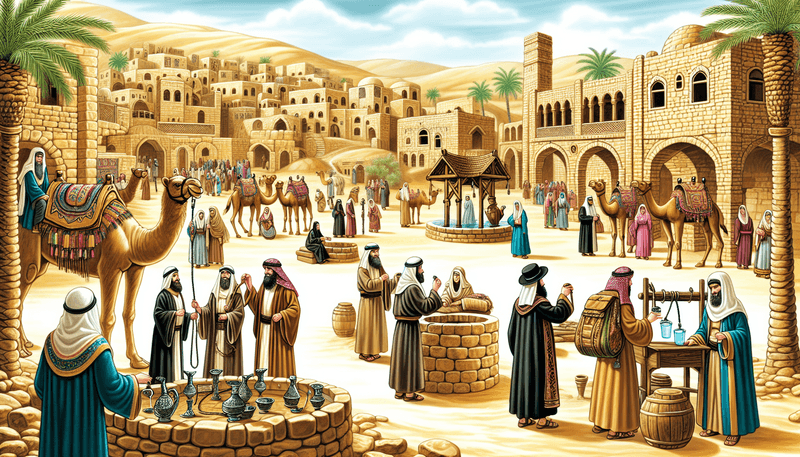
Following Sarah's burial, Abraham's attention turns to ensuring his legacy through Isaac. Abraham instructs his oldest servant to find a wife for Isaac from his relatives back in Mesopotamia, stressing that Isaac must not marry a Canaanite woman. The servant takes an oath and travels to Nahor, where he prays for a sign to identify the right woman. Rebekah, the daughter of Bethuel and granddaughter of Nahor, Abraham's brother, appears at the well, fulfilling the servant's prayer by offering water to him and his camels, signifying her kindness and suitability.
Rebekah's family agrees to her marriage to Isaac after hearing of the servant's mission and witnessing divine signs. Rebekah herself consents to leave immediately, displaying her own faith and decisiveness. Upon returning to Canaan, Rebekah meets Isaac in the fields. Isaac, who is comforted after his mother's death by Rebekah's presence, marries her, reinforcing the continuity of Abraham's lineage.
The parasha concludes with the account of Abraham's final years. Abraham marries Keturah, who bears him six sons, though it is clear that Isaac is his primary heir. Abraham's death at the age of 175 is noted, and he is buried by both Isaac and Ishmael beside Sarah in the cave of Machpelah. The narrative briefly shifts to Ishmael, listing his descendants and noting his death at age 137, before refocusing on Isaac, poised to carry forward Abraham's legacy.
An interesting idea that emerges from Hayei Sarah is the profound emphasis on continuity and transition. The careful planning by Abraham for his burial and his son's marriage, the servant's quest for the right wife for Isaac, and the detailed genealogies all highlight a deliberate effort to ensure continuity of faith, values, and lineage. This idea underscores the importance of thoughtful preparation and active engagement in shaping one's legacy, a concept that resonates deeply within the fabric of communal and personal life.
Created by Rabbi Ari (AI)