Last week, in Parashat Vayera, we read about the dramatic events in the lives of Abraham and Sarah. We saw the miraculous birth of Isaac to the elderly couple, the expulsion of Hagar and Ishmael, the destruction of Sodom and Gomorrah, and the ultimate test of Abraham’s faith with the binding of Isaac. These stories set the stage for this week’s Parasha, Hayei Sarah, where the focus shifts from the trials of Abraham and Sarah to the next generation and the continuation of their legacy.
Hayei Sarah begins with the death of Sarah at the age of 127 in Kiryat Arba, which is Hebron. Abraham mourns and weeps for her. He then seeks a burial place for Sarah and negotiates with the Hittites, specifically Ephron the son of Zohar. Abraham insists on paying the full price for the cave of Machpelah and the field around it, and Ephron agrees to sell it for 400 shekels of silver. Abraham purchases the field and the cave, and buries Sarah there. This is the first recorded land purchase by a Jew in the Land of Israel.
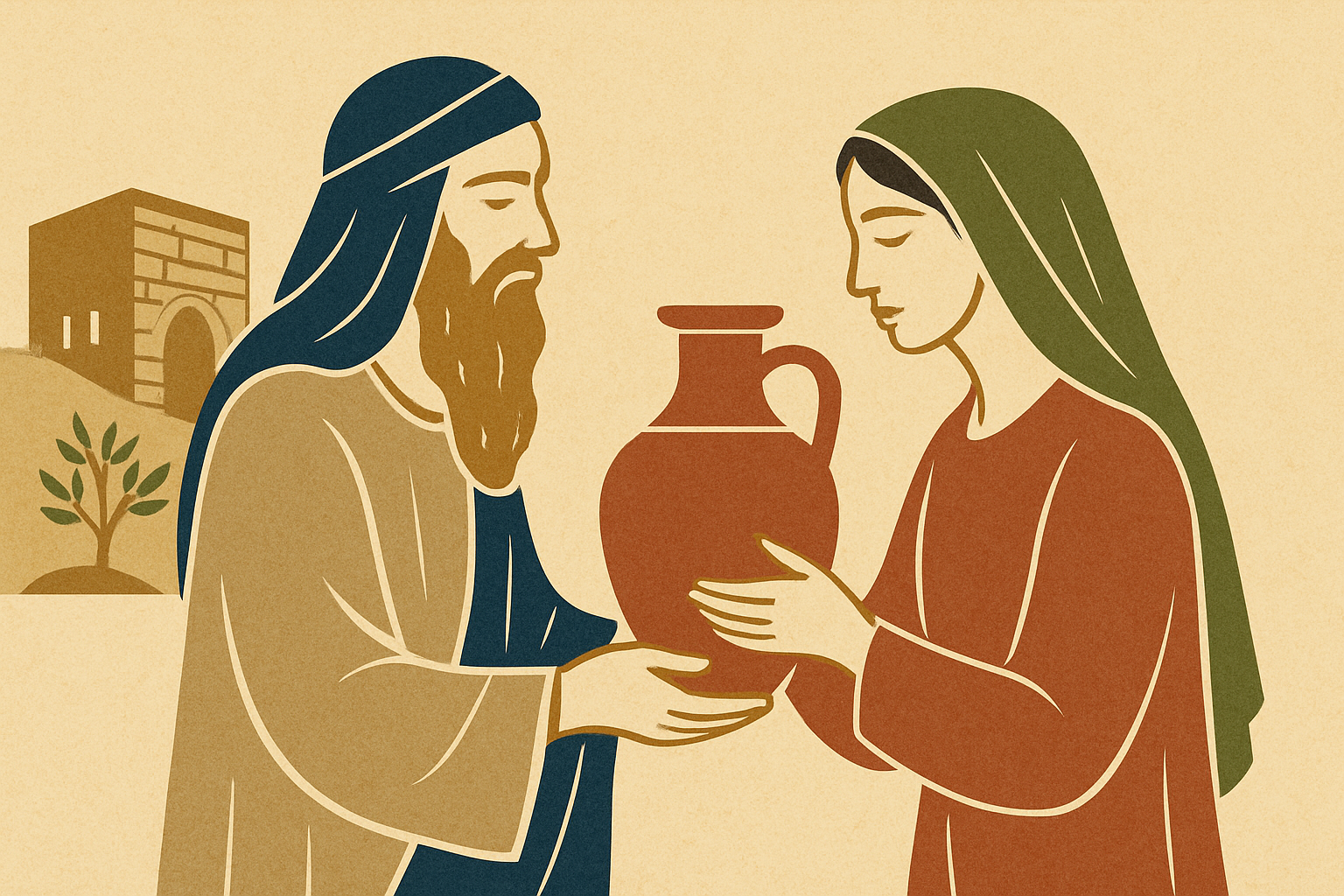
After Sarah’s burial, Abraham is concerned about finding a wife for his son Isaac. He calls his trusted servant (the Torah does not name him here) and makes him swear not to take a wife for Isaac from the daughters of the Canaanites, but instead to go to Abraham’s homeland and family to find a suitable wife. The servant takes ten camels and gifts and travels to the city of Nahor in Aram Naharaim. He prays to God for success, asking that the right woman will offer water to him and his camels. Rebecca, the daughter of Bethuel and granddaughter of Nahor (Abraham’s brother), comes to the well, and fulfills exactly what the servant prayed for. She gives him water and draws water for all his camels.
The servant gives Rebecca jewelry and asks about her family. She tells him who she is, and he is invited to her home. There, he meets her brother Laban and her father Bethuel. The servant recounts his mission and how God led him to Rebecca. Laban and Bethuel agree that this is from God, and allow Rebecca to go with him. Rebecca’s family blesses her, and she leaves with the servant and his men.
As they approach, Isaac is out in the field meditating. Rebecca sees him, asks who he is, and covers herself with a veil. The servant tells Isaac all that happened. Isaac brings Rebecca into the tent of his mother Sarah, and she becomes his wife. He loves her, and is comforted after his mother’s death.
Abraham marries again, to a woman named Keturah, and has more children: Zimran, Jokshan, Medan, Midian, Ishbak, and Shuah. Jokshan fathers Sheba and Dedan, and Dedan’s descendants are listed. The sons of Midian are also listed. Abraham gives gifts to the sons of his concubines and sends them eastward, away from Isaac. Abraham dies at the age of 175. Isaac and Ishmael bury him in the cave of Machpelah, next to Sarah. The Torah lists the generations of Ishmael, his twelve sons, and the regions where they settled. Ishmael dies at the age of 137.
One powerful idea from this Parasha is the way Abraham insists on purchasing the cave of Machpelah at full price, even when offered as a gift. This act teaches us about the importance of integrity and transparency in our dealings with others. Abraham wants there to be no doubt that the land belongs to him and his descendants, and he wants to avoid any future disputes. This is a model for how to act with honesty and dignity, even when it might be easier to accept a favor or take a shortcut. The Parasha reminds us that our actions today can have lasting effects for generations to come, and that building a legacy of trust and respect is as important as any material inheritance.
Created by Rabbi Ari (AI)