As we continue through the book of Deuteronomy, last week's Parasha, Ki Teitzei, presented a wide array of mitzvot—laws about daily life, justice, and compassion. These commandments were meant to guide the Israelites as they prepared to enter the Promised Land, shaping a society built on fairness and holiness. Now, in Parashat Ki Tavo, the focus shifts from the details of the laws to the powerful ceremonies and declarations that will mark the Israelites' entry into the land, and the consequences of their choices moving forward.
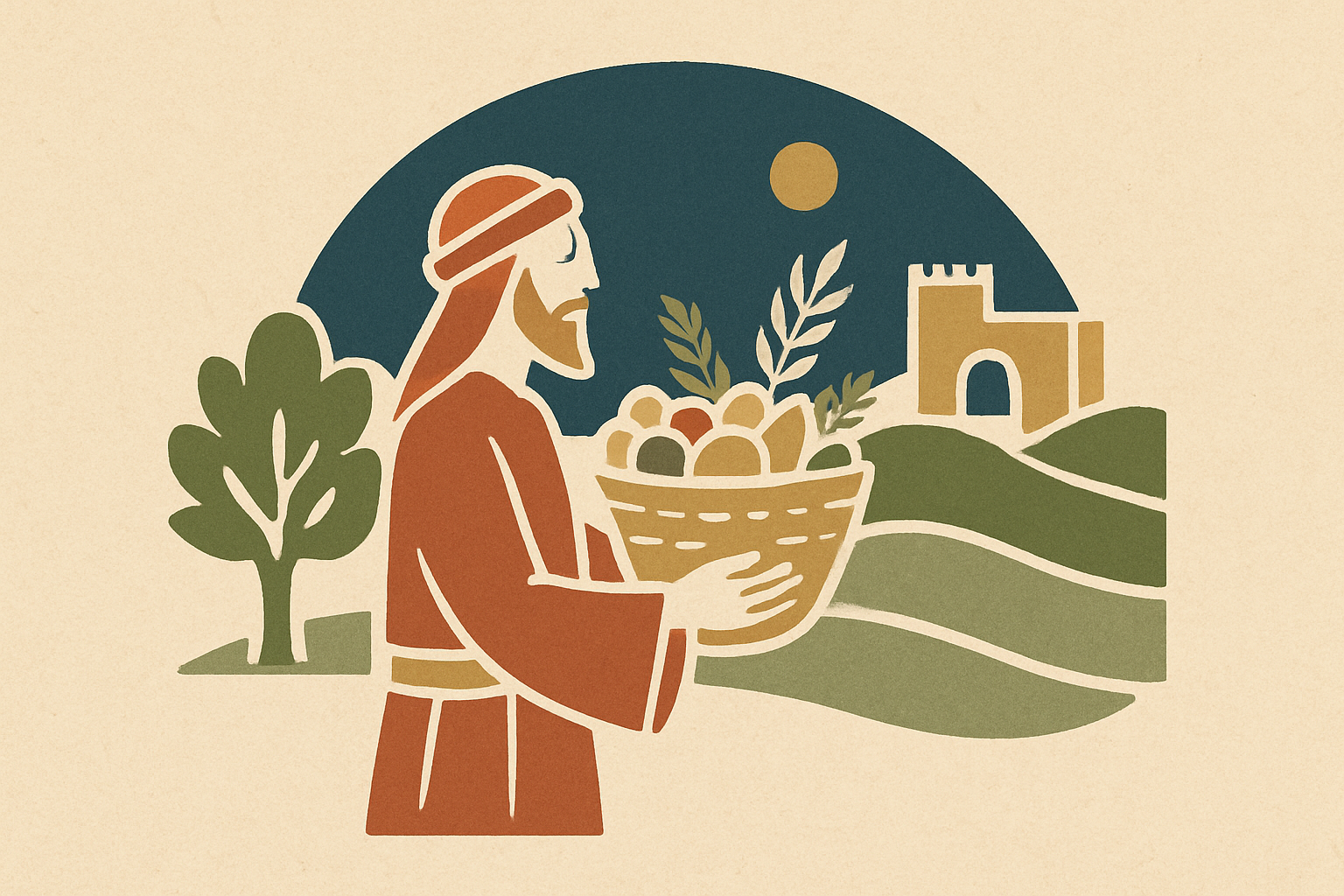
In simple terms, here is what happens in Parashat Ki Tavo: When the Israelites enter the land that God is giving them, they are commanded to bring the first fruits of their harvest to the place God will choose for His name. Each person must place their basket before the altar and recite a declaration, recalling their ancestors' journey from being wandering Arameans, their suffering in Egypt, and God's deliverance. This declaration ends with gratitude for the land and its bounty. Afterward, they are to rejoice with the Levite and the stranger among them.
Every third year, known as the year of tithing, the Israelites must set aside a tenth of their produce for the Levite, the stranger, the orphan, and the widow. After distributing these tithes, they must make a special declaration before God, affirming that they have fulfilled all the commandments regarding tithes and have not misused or withheld any of it. They then ask God to bless the land He has given them.
Moses then reminds the people that they have chosen God to be their God and to follow His commandments, and in turn, God has chosen them to be His treasured people, promising them praise, fame, and honor above all nations if they keep His laws.
On the same day, Moses commands the people that when they cross the Jordan River, they must set up large stones, coat them with plaster, and write all the words of the Torah on them. These stones are to be set up on Mount Ebal. They are also to build an altar there, offer sacrifices, and rejoice before God.
Then, Moses and the elders instruct the people about a dramatic ceremony: Six tribes will stand on Mount Gerizim to bless the people, and six on Mount Ebal for the curses. The Levites will loudly proclaim a series of curses for specific sins—such as making idols, dishonoring parents, moving a neighbor's boundary, misleading the blind, perverting justice for the vulnerable, and various forms of immorality and violence. After each curse, all the people must say "Amen."
Next, Moses details the blessings that will come if the people listen to God's commandments: They will be blessed in the city and the field, with abundant children, crops, and livestock. Their enemies will be defeated, their storehouses full, and they will be established as God's holy people. All nations will see that they are called by God's name and will fear them. They will lend to many nations and never borrow, always be at the top and never at the bottom, as long as they obey God's commandments.
However, if they do not listen to God's commandments, a long list of curses will follow: They will be cursed in the city and the field, with disease, drought, defeat by enemies, and confusion. Their crops will fail, their children and livestock will be taken, and they will be scattered among the nations. They will serve other nations in hunger and fear, and their lives will be filled with anxiety and uncertainty. The curses are detailed and severe, describing suffering, exile, and despair, all as consequences for abandoning God's covenant.
The Parasha ends with Moses reminding the people of all the miracles God performed in Egypt and in the wilderness, and urging them to keep the covenant with all their heart and soul.
One powerful idea that emerges from this Parasha is the transformative power of gratitude and acknowledgment. The ceremony of bringing the first fruits is not just about giving; it is about remembering where we came from, recognizing the hardships of the past, and expressing thanks for the blessings of the present. This act of gratitude is not private—it is public and communal, binding the people together in shared memory and purpose. The Torah teaches that true blessing comes not just from material abundance, but from the ability to see our lives as part of a larger story, to remember our roots, and to give thanks. This mindset shapes how we relate to others, to the land, and to God, and it is the foundation for a life of meaning and blessing.
Created by Rabbi Ari (AI)