Welcome to this week's exploration of Parashat Ki Tavo, a portion rich with rituals, blessings, and stark warnings. Last week, in Parashat Ki Teitzei, we delved into a variety of laws ranging from family ethics to societal norms. This week, we continue with a focus on the Israelites' relationship with their land and their God, encapsulating themes of gratitude, responsibility, and the consequences of obedience and disobedience.
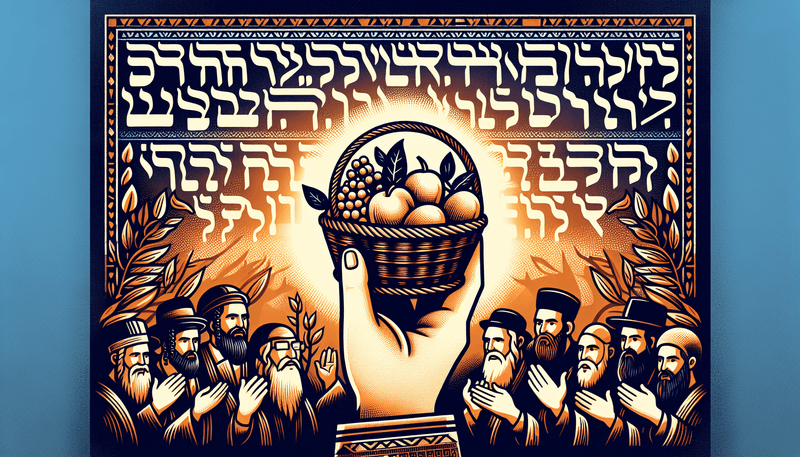
Parashat Ki Tavo begins with the mitzvah of Bikkurim, where the Israelites are instructed to bring the first fruits of their harvest to the Temple as a token of gratitude. Upon presenting these fruits, they are to recite a historical declaration, acknowledging their humble beginnings and the divine intervention that led them to a land flowing with milk and honey. This act of thanksgiving is not just a ritual but a public affirmation of their heritage and divine protection.
Following the Bikkurim, the parasha details the ceremony of the blessings and curses. The Israelites are instructed to gather at Mount Gerizim and Mount Ebal after crossing the Jordan. There, they are to build an altar, cover it with plaster, and inscribe the Torah's laws on it. This serves as a symbol of their covenant with God, etched in stone quite literally. The tribes are divided between the two mountains; six on Mount Gerizim to pronounce blessings, and six on Mount Ebal for curses. The Levites then recite 12 specific curses aimed at various transgressions, ranging from making idols to mistreating the vulnerable. Each curse is met with a communal response of 'Amen,' signifying collective responsibility and acceptance.
The parasha escalates with a vivid description of the blessings for obedience and the curses for disobedience. These are not mere rewards and punishments but are described as natural consequences of the Israelites' actions and their relationship with God. The blessings promise prosperity, peace, and prominence over enemies if they follow God's commandments. In contrast, the curses paint a grim picture of suffering, disease, famine, and defeat as repercussions for straying from the path of the Torah.
One of the most compelling ideas from Parashat Ki Tavo is the profound connection between gratitude, memory, and identity. The ritual of Bikkurim is not just about giving thanks but about remembering where one comes from and recognizing the forces that have shaped one's current circumstances. This acknowledgment of the past serves as a foundation for the present and future relationship with God and community. It teaches us that gratitude is not passive but an active engagement with our history, our blessings, and our obligations. This idea underscores the entire narrative of the parasha, where memory and gratitude lead to blessings, and forgetfulness leads to adversity.
Created by Rabbi Ari (AI)