Last week in Parashat Noach, we read about the great flood that destroyed almost all life on earth, except for Noach, his family, and the animals in the ark. After the flood, Noach and his descendants began to repopulate the world. The people tried to build the Tower of Babel, but God confused their language and scattered them across the earth. The Torah then listed the descendants of Noach’s sons, ending with the introduction of Terach and his family, including his son Avram (later called Avraham), who lived in Ur Kasdim. Terach took his family and set out for the land of Canaan, but they stopped and settled in Haran.
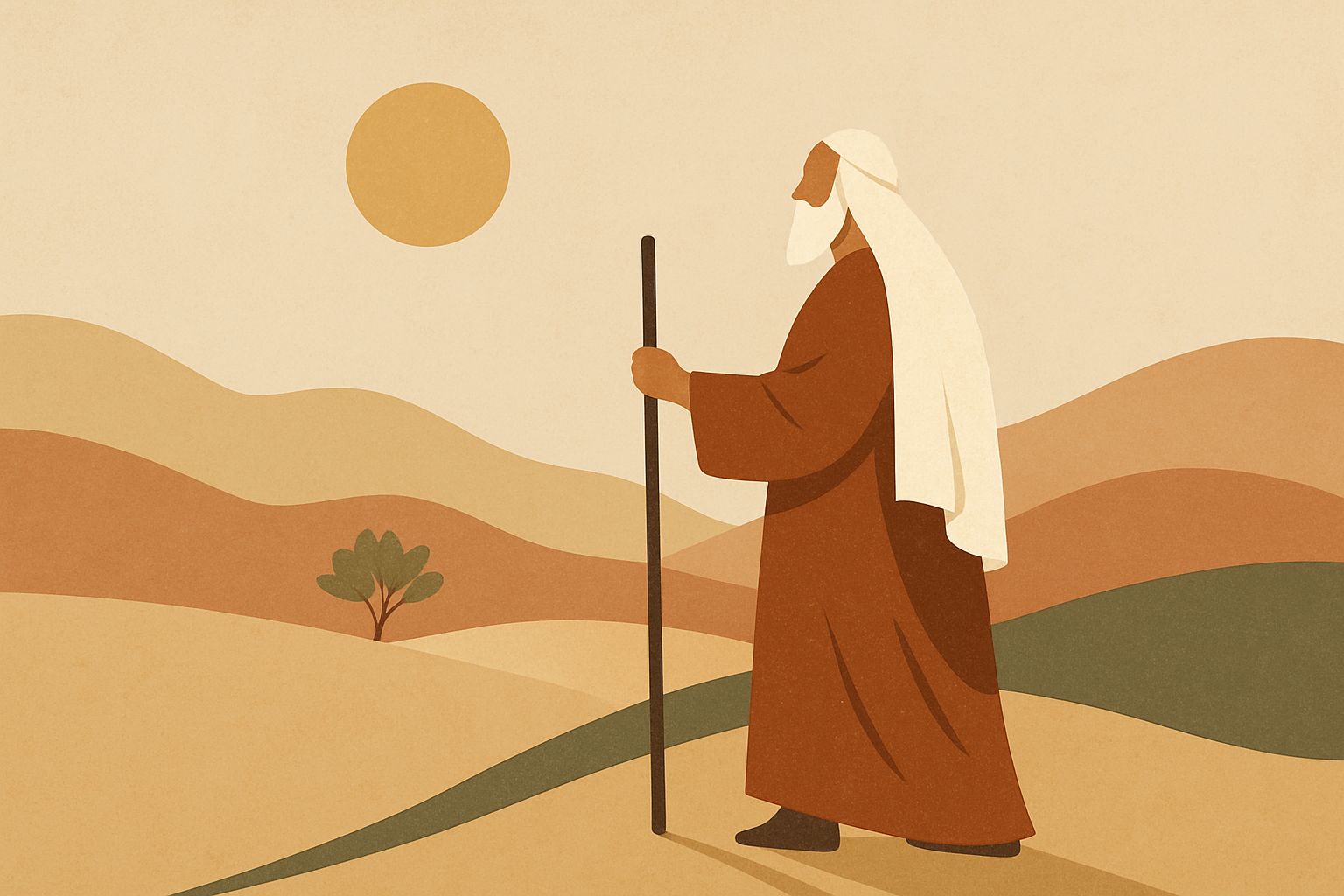
This week in Parashat Lekh Lekha, God speaks to Avram and tells him to leave his land, his birthplace, and his father’s house, and go to the land that God will show him. God promises to make Avram into a great nation, to bless him, and to make his name great. Avram, who is 75 years old, obeys and leaves Haran with his wife Sarai, his nephew Lot, and all their possessions and people they acquired. They arrive in the land of Canaan, and God appears to Avram, promising to give the land to his descendants. Avram builds altars to God in Shechem and Bethel.
There is a famine in the land, so Avram goes down to Egypt with Sarai. Fearing for his life because of Sarai’s beauty, Avram asks her to say she is his sister. Pharaoh’s officials take Sarai to Pharaoh’s house, and Pharaoh treats Avram well because of her. But God strikes Pharaoh and his household with plagues, and Pharaoh realizes the truth. He returns Sarai to Avram and sends them away with their possessions.
Back in Canaan, Avram and Lot have so many flocks and herds that the land cannot support them together, and their shepherds quarrel. Avram suggests they separate peacefully. Lot chooses the fertile plain of the Jordan and settles near Sodom, while Avram stays in Canaan. God tells Avram to look in every direction and promises that all the land he sees will belong to his descendants forever. God promises that Avram’s descendants will be as numerous as the dust of the earth. Avram settles in Hebron and builds another altar to God.
There is a war between four kings and five kings in the region. The four kings defeat the five, and Lot is taken captive. When Avram hears this, he gathers his trained men and pursues the captors, defeats them, and rescues Lot and the other captives. On his return, Melchizedek, king of Salem and priest of God Most High, brings out bread and wine and blesses Avram. The king of Sodom offers Avram the recovered goods, but Avram refuses to take anything except what his men have eaten and a share for his allies.
God appears to Avram in a vision, telling him not to fear and promising him a great reward. Avram asks about having children, since he is still childless. God tells him that his own offspring will inherit him and takes him outside to count the stars, saying his descendants will be just as numerous. Avram believes God, and God considers this righteousness. God then makes a covenant with Avram, promising the land to his descendants. In a vision, God tells Avram that his descendants will be strangers in a land not theirs, will be enslaved and oppressed for 400 years, but will eventually leave with great wealth. God makes a covenant, symbolized by a smoking furnace and a flaming torch passing between pieces of animals Avram had prepared. God specifies the borders of the land promised to Avram’s descendants.
Sarai, unable to have children, gives her Egyptian maidservant Hagar to Avram as a wife. Hagar becomes pregnant and looks down on Sarai, who treats her harshly. Hagar flees, but an angel of God finds her and tells her to return and submit to Sarai. The angel promises that her descendants will be too numerous to count and tells her to name her son Ishmael. Hagar returns and gives birth to Ishmael when Avram is 86 years old.
When Avram is 99, God appears to him and tells him to walk before God and be blameless. God makes a covenant with Avram, promising that he will be the father of many nations. God changes his name to Avraham and Sarai’s name to Sarah. God promises that Sarah will have a son and that kings will come from her. God commands Avraham and his descendants to circumcise every male as a sign of the covenant. Every male, including those born in the household or bought with money, must be circumcised at eight days old. God says that anyone who is not circumcised will be cut off from his people. God tells Avraham that Sarah will bear a son, to be named Yitzchak (Isaac), and that God will establish His covenant with Yitzchak. God also promises to bless Ishmael and make him a great nation, but the covenant will be with Yitzchak. That very day, Avraham, Ishmael, and all the males in his household are circumcised.
An idea from the Parasha: One of the most powerful lessons from this Parasha is the concept of faith and trust in the unknown. Avraham is asked to leave everything familiar and go to a land that God will show him, without knowing where he is going or what will happen. This act of stepping into the unknown, guided only by faith in God’s promise, becomes the foundation of his greatness. The Parasha teaches that true spiritual growth often requires us to leave our comfort zones and trust in a higher purpose, even when the path is unclear. Avraham’s journey is not just a physical one, but a model for every person’s journey of faith and self-discovery.
Created by Rabbi Ari (AI)