Welcome to this week's exploration of Parashat Miketz, where we delve into the continuation of Joseph's dramatic saga in Egypt. Last week, in Parashat Vayeishev, we left off with Joseph being unjustly imprisoned after refusing the advances of Potiphar's wife. His ability to interpret dreams had just begun to set the stage for his remarkable rise.
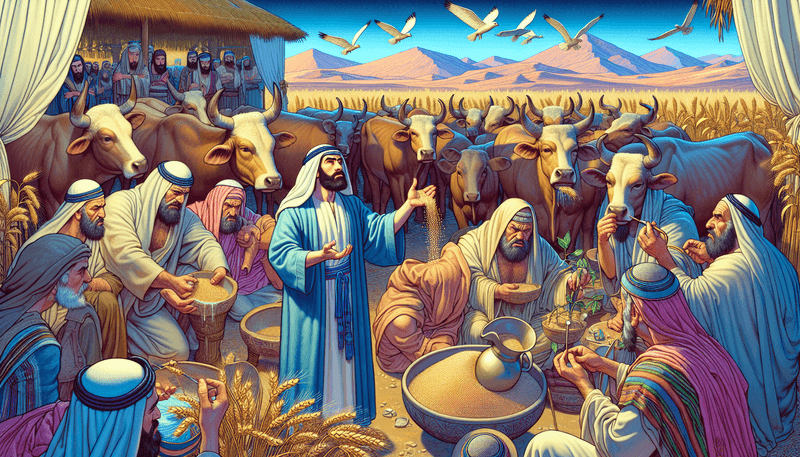
In Parashat Miketz, which means 'at the end,' we find Joseph still in prison until Pharaoh experiences troubling dreams that none of his wise men can interpret. Pharaoh's dreams feature seven healthy cows being devoured by seven gaunt cows, and seven full ears of grain swallowed by seven thin and blighted ears. Remembering Joseph's skill, the cupbearer, previously aided by Joseph, recommends him to Pharaoh. Cleaned and presented before Pharaoh, Joseph interprets the dreams as seven years of abundance in Egypt followed by seven years of severe famine. He advises Pharaoh to store surplus grain during the plentiful years to prepare for the famine. Impressed by Joseph's wisdom, Pharaoh appoints him as the second most powerful man in Egypt, in charge of the famine preparations.
As the famine begins, it affects not only Egypt but also the surrounding lands, including Canaan where Joseph's family resides. Jacob, Joseph's father, sends ten of his sons (excluding Benjamin for fear of harm) to Egypt to buy grain. The brothers arrive in Egypt, unknowingly coming before Joseph, who recognizes them but remains unrecognized. Joseph, testing his brothers' characters, accuses them of being spies. After a series of tense interactions, he demands that they bring their youngest brother to prove their honesty, holding Simeon hostage until they return.
Returning to Canaan, the brothers relay their troubling experience to Jacob, who reluctantly agrees to send Benjamin with them on their next trip after much persuasion and the onset of worsening famine. Upon their return to Egypt with Benjamin, Joseph continues his ruse but is moved by the sight of his younger brother. He hosts a feast for them but then plants a silver cup in Benjamin's sack to test his brothers' loyalty and unity. When the cup is 'discovered,' the brothers are brought back to Joseph, setting the stage for further developments.
From Parashat Miketz, we can draw a profound lesson about the power of resilience and strategic planning. Joseph's journey from the pit to the pinnacle of Egyptian politics not only showcases his personal resilience but also his ability to use foresight and wisdom to save not just Egypt, but the entire region, from devastation. His strategic planning during the years of abundance exemplifies the importance of preparation and prudent management of resources in times of prosperity to mitigate times of hardship. This idea, deeply rooted in wisdom literature, encourages us to always look ahead and prepare wisely, ensuring sustainability and security for the future.
Created by Rabbi Ari (AI)