Introduction: Last week's Parasha, Ki Tavo, described the blessings and curses that would come upon the Israelites depending on whether they followed God's commandments. It ended with a powerful ceremony on Mount Gerizim and Mount Ebal, where the people heard the consequences of their choices. The Parasha also emphasized the importance of remembering the miracles God performed in Egypt and the wilderness, and it concluded with a reminder that the covenant with God is binding and serious.
The Parasha in Simple Words: In Parashat Nitzavim, Moses gathers all the Israelites—men, women, children, elders, leaders, converts, and even the woodcutters and water-drawers—standing together before God. Moses tells them they are entering into a covenant with God, a promise that will last forever, not just with those present, but also with future generations. Moses warns them not to think that anyone can secretly turn away from God and worship other gods, thinking they will be safe. If someone does this, God will not forgive them; instead, God's anger will burn, and all the curses written in the Torah will come upon them. The land will become desolate, and other nations will see the destruction and ask why it happened. The answer will be that the people abandoned God and served other gods, so God brought all these troubles upon them.
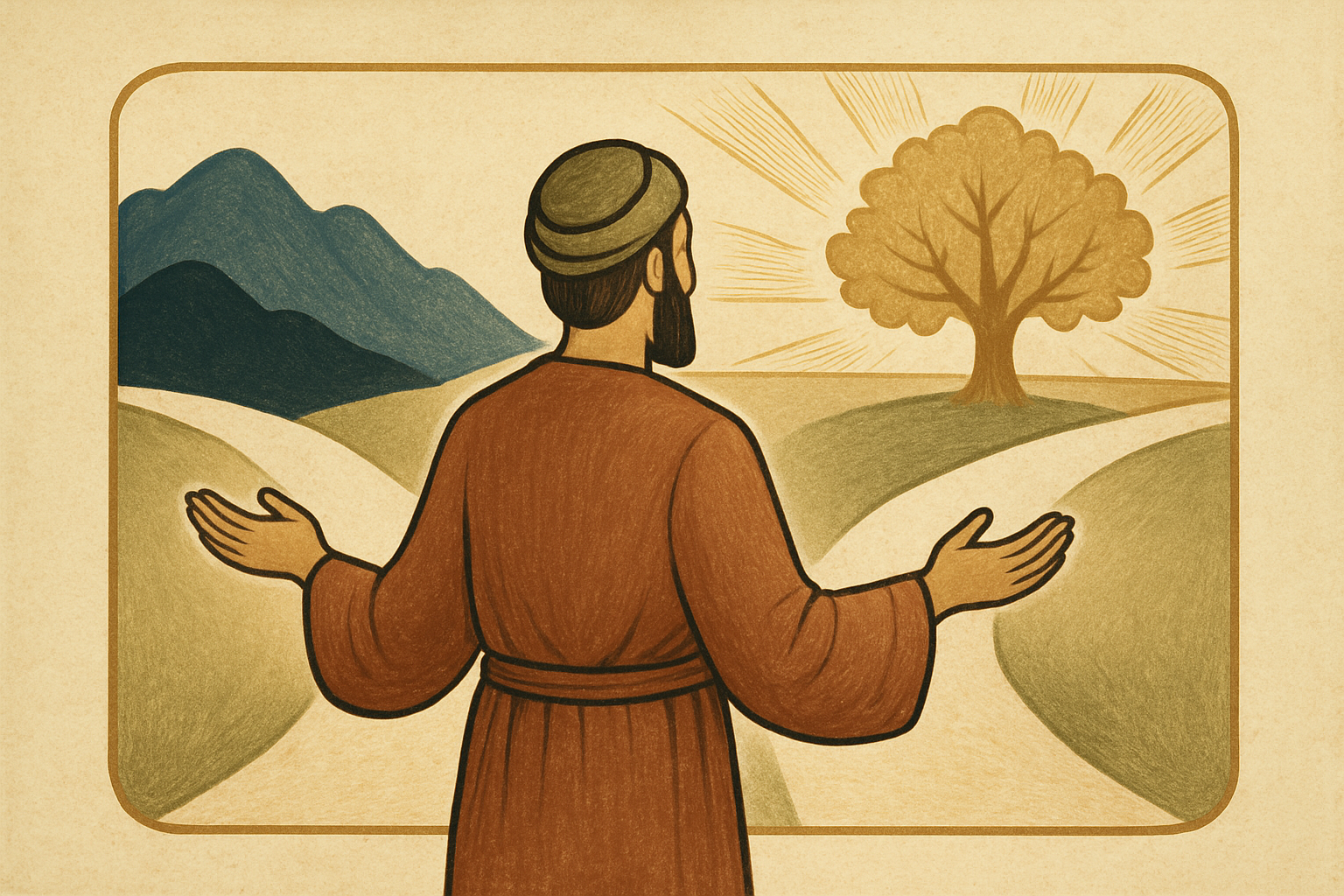
Moses then says that even if the people are scattered among the nations because of their sins, if they return to God with all their heart and soul, God will gather them back to their land, no matter how far they are. God will help them love Him and keep His commandments, and He will bless them with prosperity. Moses tells the people that the Torah and its commandments are not too difficult or far away; they are very close, in their mouths and hearts, so they can do them. Moses sets before the people a choice: life and good, or death and evil. If they love God, walk in His ways, and keep His commandments, they will live and multiply in the land. But if they turn away and worship other gods, they will perish. Moses urges them to choose life, so that they and their children may live, loving God, listening to His voice, and holding fast to Him, because God is their life and the length of their days, to dwell in the land promised to Abraham, Isaac, and Jacob.
Idea from the Parasha: One of the most powerful messages in this Parasha is the idea that the Torah and its commandments are not distant or unattainable. They are not in the heavens or across the sea, but rather, they are close to us—within our mouths and hearts. This teaches that every person has the ability to connect to God and to live a meaningful, moral life. The choice is always in our hands, and no one is excluded from the possibility of return and renewal. Even after mistakes or exile, the path back is always open. This idea gives hope and responsibility: we are never too far, and the power to choose life is always ours.
Created by Rabbi Ari (AI)