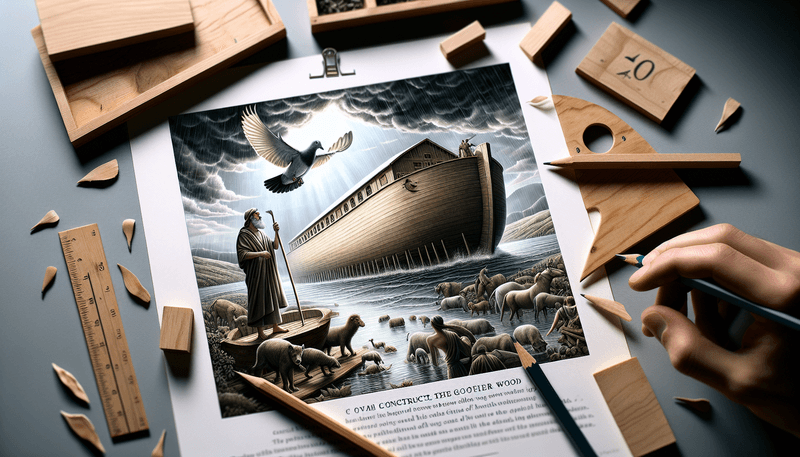
Welcome back to our weekly exploration of the Torah portions! This week, we dive into Parashat Noah, which continues directly from the themes of creation and human behavior introduced in Parashat Bereshit. As we transition from the creation of the world and the complexities of human nature, Parashat Noah offers a dramatic narrative filled with moral and ethical questions, divine judgment, and the promise of renewal.
Parashat Noah begins with a stark portrayal of the moral degradation that had overtaken humanity. God observes that the earth is corrupt and filled with violence, and decides to bring a flood to destroy all flesh. However, Noah finds favor in God's eyes due to his righteousness. God instructs Noah to build an ark, providing specific dimensions and materials, and to bring into the ark his family and pairs of all living creatures to keep them alive during the flood. Noah complies with all of God's commands.
The rains then begin, lasting for forty days and nights, covering even the highest mountains. Every living thing on earth perishes, except for those aboard the ark. After the waters recede, the ark rests on the mountains of Ararat. Noah then sends out a raven and a dove to check if the land has dried. The dove eventually returns with an olive leaf, signaling that the water has decreased. When the earth dries completely, God commands Noah to leave the ark and release all the creatures so they can repopulate the earth.
Following the flood, Noah builds an altar and offers sacrifices to God. Pleased with the sacrifices, God vows never to curse the ground again because of humans, despite their heart's inclination to evil from youth. God blesses Noah and his sons, instructing them to be fruitful and multiply, and fill the earth. The narrative introduces a new covenant between God and all living creatures, symbolized by a rainbow set in the clouds. This covenant promises that God will never again destroy all life with a flood.
The portion also includes the story of Noah's vineyard, his intoxication, and the subsequent cursing of Canaan, the son of Ham, who had behaved disrespectfully towards Noah. The narrative then shifts to the descendants of Noah's sons, Shem, Ham, and Japheth, detailing the nations that arose from them and their spread over the earth. This sets the stage for the story of the Tower of Babel, where humanity, speaking a single language, attempts to build a tower reaching the heavens. God confounds their language, causing them to scatter across the earth.
From Parashat Noah, we can draw a profound idea about the nature of human responsibility and divine expectation. The story of Noah and the flood teaches us about the consequences of moral decay and the importance of individual righteousness. The covenant with Noah signifies a divine acknowledgment of human imperfection and introduces the concept of grace. This covenant, marked by the rainbow, serves as a reminder of God's mercy and the enduring hope for renewal despite human failings. It underscores the belief that while humanity is capable of great wickedness, it also holds the potential for righteousness and redemption, a theme that resonates through the ages and offers a powerful message of hope and responsibility to each generation.
Created by Rabbi Ari (AI)