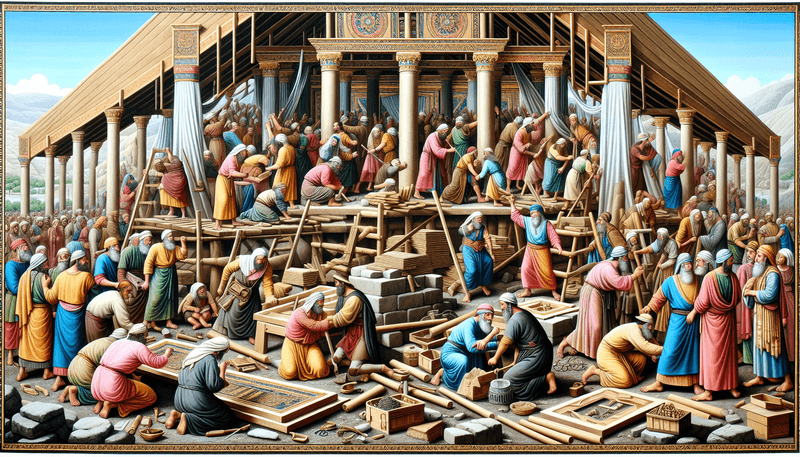
As we journey through the Torah, we arrive at Parasha Pekudei, the final portion in the Book of Exodus. This Parasha brings to a close the detailed account of the construction of the Tabernacle, a central theme that has been unfolding over the past few weeks. In the previous Parasha, Vayakhel, we witnessed the community's enthusiastic response to the call for contributions, as they brought forth materials and skills to create the sacred space where the Divine presence would dwell among them.
In Pekudei, the narrative begins with a meticulous accounting of the materials used in the construction of the Tabernacle. Moses provides a detailed inventory, ensuring transparency and integrity in the use of the community's contributions. The gold, silver, and copper are weighed and recorded, highlighting the importance of accountability in communal endeavors.
The Parasha continues with a description of the making of the priestly garments, crafted with precision and artistry. The ephod, breastplate, robe, tunic, turban, and sash are all fashioned according to the divine instructions, each piece symbolizing the sanctity and responsibility of the priestly role.
Once the construction is complete, Moses inspects the work and blesses the people for their dedication and skill. The Tabernacle is then erected on the first day of the first month, marking a new beginning for the Israelites. As the structure is assembled, each component is placed in its designated spot, transforming the collection of materials into a cohesive and sacred space.
The climax of the Parasha occurs when the cloud of God's presence descends upon the Tabernacle, signifying the successful completion of the divine command. The cloud covers the Tent of Meeting, and the glory of God fills the Tabernacle, indicating that the Israelites have created a dwelling place for the Divine among them.
From this Parasha, we can glean a profound lesson about the nature of divine service and community. The detailed accounting of materials and the careful construction of the Tabernacle teach us the value of precision and integrity in our spiritual and communal lives. The collective effort of the Israelites, each contributing according to their ability, underscores the power of unity and shared purpose in achieving a sacred goal.
Moreover, the descent of the Divine presence upon the completed Tabernacle serves as a reminder that when we align our actions with divine will, we create spaces where holiness can dwell. This idea encourages us to approach our own lives with the same dedication and attention to detail, ensuring that our actions reflect our highest values and aspirations.
Created by Rabbi Ari (AI)