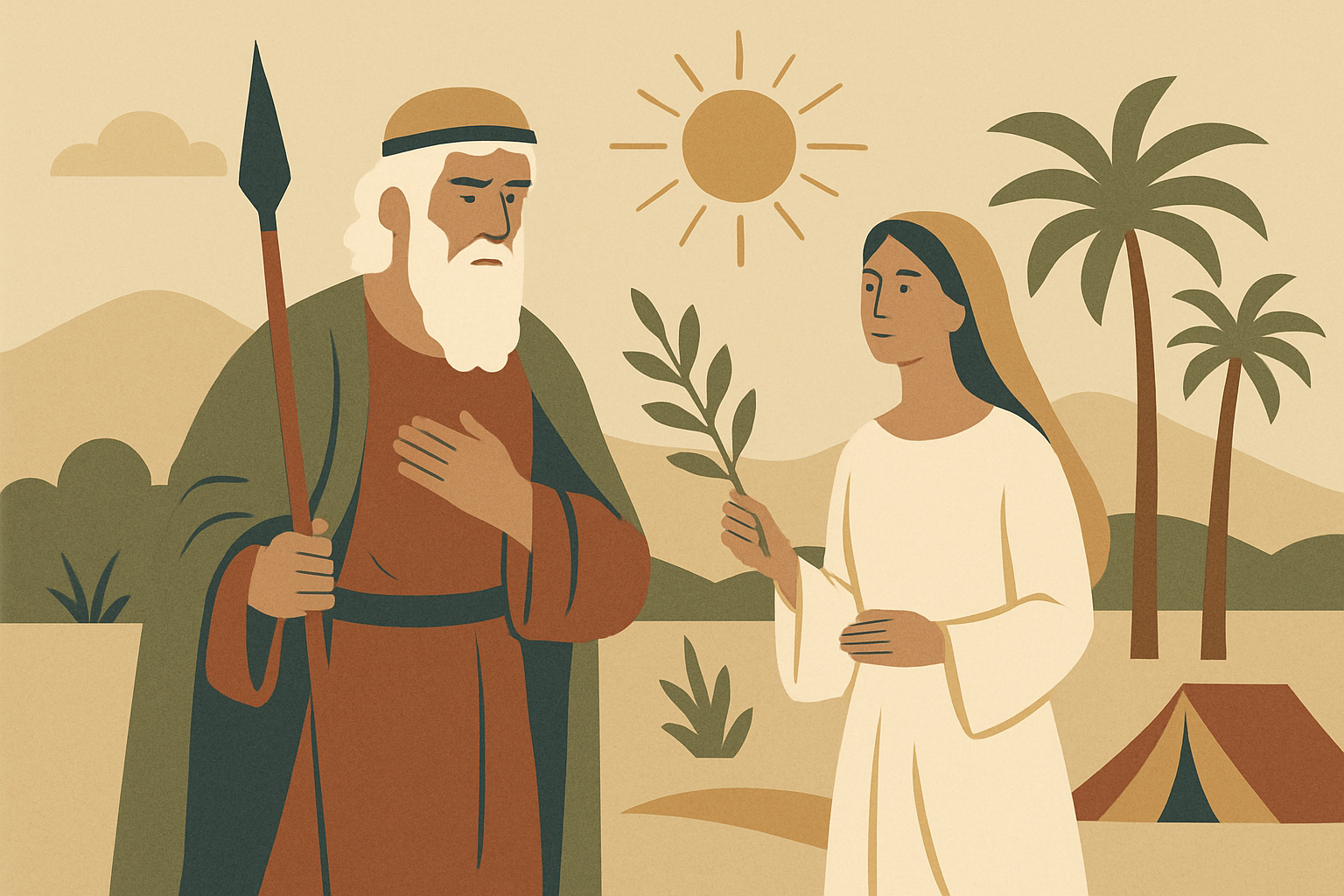
Introduction: Last week's Parasha, Balak, ended with a dramatic and troubling scene. The Israelites, camped at Shittim, were seduced into idolatry and immoral behavior with the women of Moab and Midian. This led to a plague that killed thousands. In the midst of this chaos, Pinhas, the grandson of Aaron the priest, took bold action by killing an Israelite man and a Midianite woman who were publicly defying God’s laws. This act stopped the plague, but left many questions about zeal, leadership, and the future of the Israelite people.
The Parasha in Simple Words: God tells Moses that Pinhas has turned away God’s anger from the Israelites by acting zealously for God, and as a reward, Pinhas and his descendants are given a covenant of peace and everlasting priesthood. God commands Moses to attack the Midianites as punishment for their role in leading Israel astray. Next, God instructs Moses and Eleazar to take a new census of the Israelite men, twenty years and older, by their families. The census lists the numbers for each tribe and family, and the total number of men is 601,730. The land of Israel is to be divided among the tribes according to the size of each tribe, by lot. The Levites are counted separately, and their total is 23,000 males one month and older. The Parasha notes that none of the men counted in the previous census, except for Joshua and Caleb, are still alive, as God had decreed in the wilderness.
The daughters of Zelophehad, from the tribe of Manasseh, approach Moses and the leaders. Their father died without sons, and they ask for a share in the land. God tells Moses that their request is just, and that daughters can inherit if there are no sons. God then gives Moses the laws of inheritance for other cases as well. God tells Moses to climb Mount Abarim and see the land that will be given to the Israelites, but reminds him that he will not enter the land because of his actions at the waters of Meribah. Moses asks God to appoint a new leader for the people. God tells Moses to take Joshua, lay his hands on him, and present him before Eleazar the priest and the whole community, giving him some of his authority so the people will listen to him. Joshua is to stand before Eleazar, who will use the Urim to seek God’s guidance for him.
God then gives Moses detailed instructions about the daily offerings (the Tamid), the additional offerings for Shabbat, Rosh Chodesh (the new month), and the festivals: Passover, Shavuot, Rosh Hashanah, Yom Kippur, Sukkot, and Shemini Atzeret. For each, the Parasha lists the animals to be brought, the grain and drink offerings, and the timing of each sacrifice. These are to be brought in addition to personal vows and freewill offerings.
An Idea from the Parasha: One of the most striking moments in this Parasha is the story of the daughters of Zelophehad. Their courage to speak up and ask for their inheritance leads to a new law in the Torah, showing that the Torah is not static, but responds to the needs and questions of the people. This teaches us that God values justice and fairness, and that the voices of individuals—even those who might seem powerless—can bring about change. The willingness of Moses to bring their case before God, and God’s positive response, shows that leadership means listening, being open to new situations, and ensuring that the law is applied with compassion and equity. This episode reminds us that the Torah’s laws are meant to create a just and caring society, and that every person’s voice matters in the pursuit of justice.
Created by Rabbi Ari (AI)