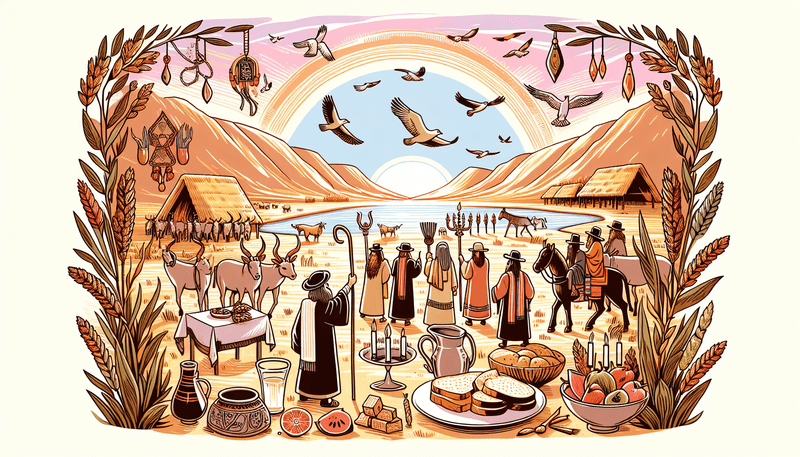
This week's Torah portion, Parashat Re’eh, presents us with a profound exploration of choices and their consequences, set against the backdrop of divine blessings and curses. The portion begins with Moses addressing the Israelites, offering them a stark choice between blessing and curse, contingent on their obedience to God's commandments. This theme of choice is a continuation and a deepening of the discussions from previous portions, where the Israelites were repeatedly called to follow God’s laws and were warned of the repercussions of disobedience.
In simple terms, Parashat Re’eh can be summarized as follows: Moses tells the people that they are given the choice to receive blessings if they obey God's commandments, or curses if they do not. He emphasizes the importance of destroying all places where the nations they are to dispossess worshiped their gods. The Israelites are instructed to worship God in a place that He will choose and to bring their sacrifices there. They are warned not to do as they please, following their own ideas of worship, but to adhere to the divine commandments.
Moses also instructs the people on the proper treatment of the poor and the release of debts every seven years, ensuring that there are no needy among them through generous lending and assistance. The portion details the laws concerning the Hebrew servant, who is to be released in the seventh year with provisions to help him start anew. The firstborn of cattle and sheep are to be dedicated to God and used for feasts in the chosen place.
The Israelites are warned against false prophets and enticers to idolatry, even if they are close family members. The portion also outlines the dietary laws, distinguishing between clean and unclean animals, and reiterates the prohibition against eating blood. The portion concludes with the regulations for the three pilgrimage festivals: Passover, Shavuot, and Sukkot, which are to be celebrated in the place that God will choose.
From this Parasha, an interesting idea emerges about the central role of choice in our spiritual and communal lives. The presentation of blessings and curses as direct consequences of our actions serves as a powerful reminder of the impact of our choices. This idea underscores a fundamental principle in Jewish thought: the freedom of choice. Each individual is empowered to choose their path, and this freedom is both a privilege and a responsibility. The emphasis on choosing correctly and following God’s commandments highlights the importance of informed and conscientious decision-making in fostering a just and holy community.
Created by Rabbi Ari (AI)