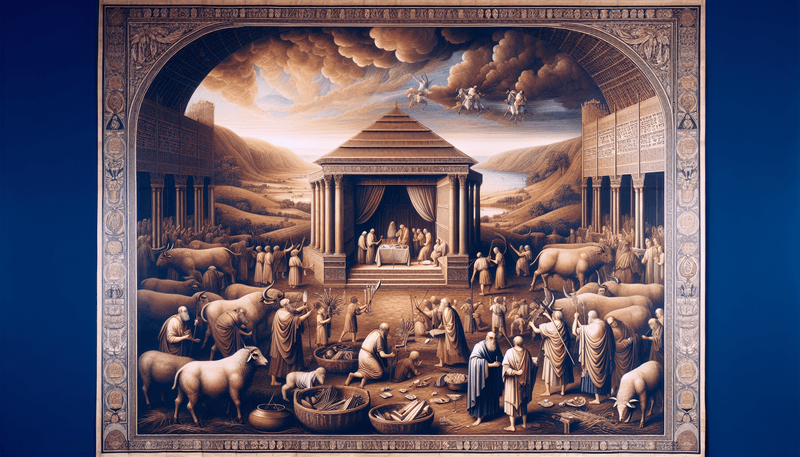
This week, we delve into Parashat Shemini, a portion that marks a significant moment in the journey of the Israelites as they continue to establish their spiritual practices. To fully appreciate the events of Shemini, we must briefly revisit the preceding Parashat Tzav, where the instructions for the consecration of Aaron and his sons as priests were detailed. The Israelites were given meticulous guidelines for offerings and sacrifices, setting the stage for the divine service that would unfold in Shemini.
As we enter Parashat Shemini, the eighth day of the consecration ceremony arrives, a day filled with anticipation and divine presence. Moses calls upon Aaron, his sons, and the elders of Israel to bring specific offerings: a calf for a sin offering and a ram for a burnt offering. The people are instructed to present a goat for a sin offering, a calf and a lamb for a burnt offering, an ox and a ram for peace offerings, and a grain offering mixed with oil. These offerings are to be made before the Lord, as today, the Lord will appear to them.
Aaron follows Moses' instructions meticulously, offering the sacrifices as commanded. As the offerings are made, the glory of the Lord appears to all the people. Fire comes forth from before the Lord and consumes the burnt offering and the fat on the altar, and the people witness this divine fire and shout with joy, falling on their faces in reverence.
However, the day takes a tragic turn when Aaron's sons, Nadab and Abihu, offer unauthorized fire before the Lord, which He had not commanded. A divine fire consumes them, and they die before the Lord. Moses instructs Aaron and his remaining sons, Eleazar and Ithamar, not to mourn publicly, as they are anointed with the holy oil and must continue their priestly duties. The rest of the community, however, is allowed to mourn the loss.
The Parasha continues with God speaking to Aaron directly, emphasizing the importance of distinguishing between the holy and the common, the clean and the unclean. Aaron and his sons are commanded not to drink wine or strong drink when entering the Tent of Meeting, ensuring their ability to discern and teach the Israelites all the statutes given by the Lord through Moses.
The Parasha concludes with dietary laws, detailing which animals are permissible to eat and which are not. Land animals must have split hooves and chew the cud, while sea creatures must have fins and scales. Birds of prey and certain insects are deemed unclean, while locusts, crickets, and grasshoppers are permitted. These laws are given to maintain the holiness of the Israelites, setting them apart as a people dedicated to God.
An intriguing idea from this Parasha is the concept of divine fire and its dual nature. The same fire that signifies God's presence and acceptance of the offerings also serves as a force of judgment and consequence for Nadab and Abihu's transgression. This duality highlights the importance of intention and obedience in spiritual practice. The divine fire is a reminder that while God's presence is a source of blessing and joy, it also demands respect and adherence to His commandments. This idea encourages us to approach our spiritual lives with both reverence and mindfulness, recognizing the profound responsibility that comes with serving the divine.
Created by Rabbi Ari (AI)