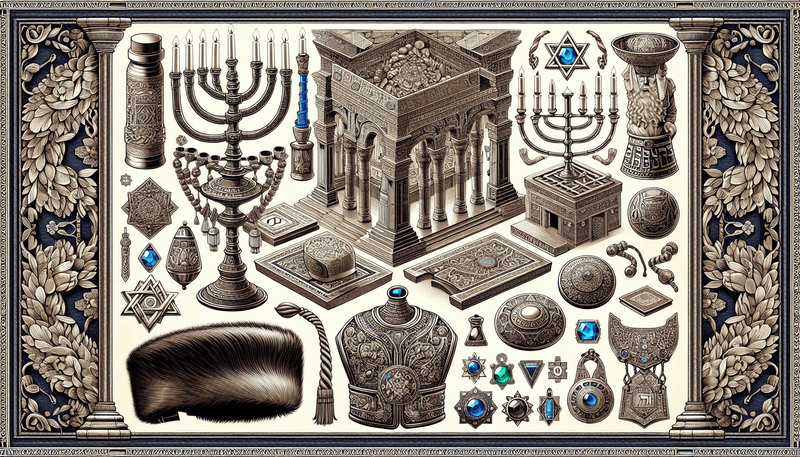
As we delve into Parasha Tetzaveh, we continue the journey from last week's Parasha, Terumah, where the Israelites were instructed to build the Tabernacle, a sacred space for divine presence. The focus was on the construction of the Ark, the Table, the Menorah, and the structure of the Tabernacle itself. These elements set the stage for this week's Parasha, which shifts attention to the people who will serve within this holy space and the garments they will wear.
In Parasha Tetzaveh, God commands Moses to instruct the Israelites to bring pure olive oil for the Menorah, ensuring it burns continually in the Tent of Meeting. This eternal flame symbolizes the perpetual presence of God among the people. The Parasha then details the sacred garments to be worn by Aaron and his sons, who are to serve as priests. These garments include the breastplate, ephod, robe, tunic, turban, and sash, each crafted with specific materials and colors, such as gold, blue, purple, and crimson yarns, and fine linen.
The breastplate, known as the 'Choshen,' is adorned with twelve stones, each representing one of the tribes of Israel. The ephod, a richly embroidered apron-like garment, is to be worn over the robe. The robe itself is to be made entirely of blue wool, with pomegranates and bells attached to its hem. The tunic is to be woven of fine linen, and the turban and sash are to be crafted with skill and precision.
God also provides instructions for the consecration of Aaron and his sons as priests. This involves a seven-day ceremony, including offerings of a bull and two rams, the anointing of Aaron with oil, and the donning of the sacred garments. The Parasha concludes with the command to build an altar for burning incense, placed before the Ark of the Covenant, signifying the importance of prayer and worship in the service of God.
An intriguing idea from this Parasha is the symbolism of the priestly garments. Each piece of clothing is not merely decorative but serves a deeper purpose, representing the spiritual qualities required of those who serve in the Tabernacle. The breastplate, with its twelve stones, signifies the unity and diversity of the Israelite tribes, reminding the priests of their responsibility to represent all the people before God. The bells on the robe symbolize the need for the priests to be heard, ensuring transparency and accountability in their service. The intricate design and materials of the garments reflect the beauty and sanctity of the divine service, emphasizing that those who serve God must do so with dignity and reverence.
Created by Rabbi Ari (AI)