Welcome to this week's exploration of Parashat Toldot, a narrative rich with themes of family dynamics, blessings, and the complexities of sibling relationships. As we delve into this portion, we continue the saga of the patriarchs and matriarchs that shape the foundation of Jewish heritage.
Last week, in Parashat Chayei Sarah, we witnessed the end of Sarah's life, the acquisition of a burial site in Hebron, and the quest of Abraham's servant to find a suitable wife for Isaac, culminating in the beautiful introduction of Rebecca into the narrative. These events set the stage for the unfolding drama in Parashat Toldot.
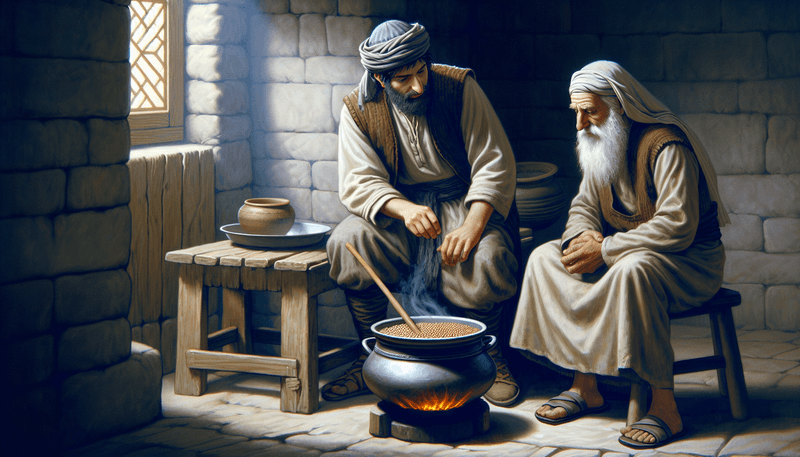
In simple terms, Parashat Toldot can be described as a continuation of the legacy of Isaac and the introduction of his twin sons, Jacob and Esau. Isaac prays to God on behalf of his wife, Rebecca, who is barren. God answers his prayers, and Rebecca conceives twins who struggle within her womb. This is interpreted as a sign of the perpetual struggle between two nations that they will father.
Rebecca gives birth to Esau, a skillful hunter, and Jacob, a simple man dwelling in tents. Isaac, who has a taste for wild game, favors Esau, while Rebecca loves Jacob. As a severe famine strikes the land, unlike the one in Abraham's time, God instructs Isaac not to go to Egypt but to stay in Gerar, where He reaffirms the covenant He made with Abraham, promising numerous descendants and blessings to Isaac and his progeny.
While in Gerar, Isaac lies about Rebecca being his sister for fear of being killed over her. Abimelech, king of the Philistines, discovers the truth and admonishes Isaac for endangering the people of Gerar. Isaac's wealth grows, causing envy among the Philistines. Eventually, Abimelech asks Isaac to leave due to his great prosperity.
Isaac then re-digs the wells his father had dug, which the Philistines had stopped up after Abraham's death. After disputes over the first two wells, Isaac finally digs a third well over which there is no quarrel, demonstrating his desire for peace.
The narrative climaxes with the famous deceit of Isaac's blessing. As Isaac grows old and his eyesight dims, he asks Esau to hunt game and prepare a meal for him, after which he will bless him. Rebecca overhears this and instructs Jacob to deceive Isaac into giving him the blessing meant for Esau. Jacob, dressed in Esau's clothes and with goatskins on his arms and neck to mimic his brother's hairiness, brings his father food and receives the blessings of abundance and lordship over his relatives, including Esau.
When Esau returns and the deceit is uncovered, Isaac trembles violently but confirms that the blessing must remain with Jacob. Esau is devastated and vows to kill Jacob, prompting Rebecca to send Jacob away to her brother Laban in Haran until Esau's anger subsides.
From this Parasha, we can extract a profound idea about the nature of blessings and destiny. The narrative suggests that blessings, once given, acquire a power of their own, shaping the course of future events in ways that are irreversible and binding. This idea underscores the weight of words and promises, and the profound impact they have on our personal and collective destinies. It teaches us about the responsibilities that come with power and the often unpredictable consequences of our actions.
Created by Rabbi Ari (AI)