Introduction: Last week's Parasha, Va'Yigash, ended with the dramatic reunion of Joseph and his brothers in Egypt. Jacob, their father, finally arrived in Egypt after years of mourning Joseph, whom he thought was dead. The family settled in the land of Goshen, and Joseph provided for them during the famine. Jacob met Pharaoh and blessed him, and the Israelites began to prosper in Egypt. These events set the stage for this week's Parasha, Va'yehi, which brings the Book of Genesis to a close and focuses on Jacob's final days, his blessings to his sons, and his instructions for the future.
The Parasha in Simple Words: Jacob lived in Egypt for seventeen years, and his life lasted a total of 147 years. As he felt his end approaching, Jacob called for Joseph and made him promise not to bury him in Egypt, but to carry him to the burial place of his ancestors in Canaan. Joseph swore to do so. Later, Jacob became ill, and Joseph brought his two sons, Ephraim and Manasseh, to visit their grandfather. Jacob sat up in bed and told Joseph that God had appeared to him in Luz (Bethel) and blessed him, promising to make his descendants numerous and to give them the land of Canaan. Jacob declared that Ephraim and Manasseh would be counted as his own sons, like Reuben and Simeon, and would each become a tribe of Israel. Jacob explained that the other children born to Joseph after them would be Joseph's, but Ephraim and Manasseh would have a special status.
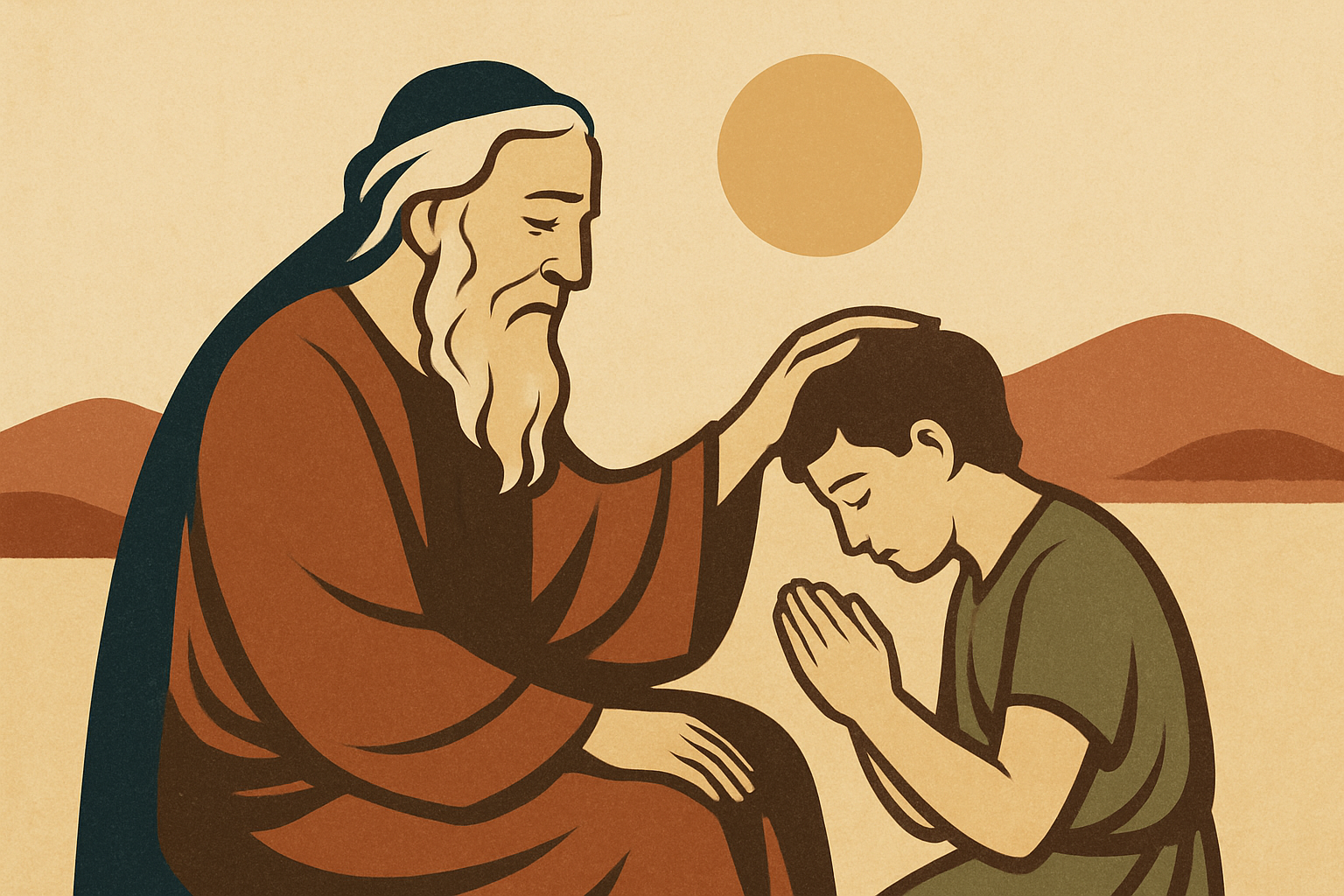
Jacob then recalled the death of Rachel, Joseph's mother, and how he buried her on the way to Efrat (Bethlehem). Jacob asked Joseph to bring his sons closer so he could bless them. Jacob's eyesight was failing, but he embraced and kissed the boys. He told Joseph he never expected to see him again, and now he had seen his children too. Joseph placed Ephraim at Jacob's left and Manasseh at his right, but Jacob crossed his hands, placing his right hand on Ephraim, the younger, and his left on Manasseh, the firstborn. He blessed them, invoking the God of his fathers Abraham and Isaac, and prayed that they would multiply in the land. Joseph tried to correct his father, but Jacob insisted that Ephraim would become greater than Manasseh, though both would be great nations. Jacob blessed them that day, saying, "By you shall Israel bless, saying: May God make you like Ephraim and Manasseh."
Jacob told Joseph that he was giving him an extra portion over his brothers, the portion he took from the Amorites with his sword and bow. Then Jacob called all his sons together to tell them what would happen to them in the future. He addressed each son in turn, describing their character and destiny. Reuben, his firstborn, lost his status because of his impulsive actions. Simeon and Levi were criticized for their violence. Judah was praised and told that kingship would come from his line. Zebulun would dwell by the sea, Issachar would be a strong-boned donkey working the land, Dan would judge his people, Gad would be attacked but would overcome, Asher would have rich food, Naphtali would be swift, and Joseph would be fruitful and blessed despite adversity. Benjamin would be like a ravenous wolf. Jacob gave each son a unique blessing appropriate to him.
After blessing his sons, Jacob instructed them to bury him with his ancestors in the Cave of Machpelah in Hebron, where Abraham, Sarah, Isaac, Rebekah, and Leah were buried. When Jacob finished speaking, he drew his feet onto the bed and died. Joseph fell on his father's face and wept. He ordered the Egyptian physicians to embalm Jacob, which took forty days, and the Egyptians mourned him for seventy days. Joseph asked Pharaoh for permission to bury his father in Canaan, as Jacob had requested. Pharaoh agreed, and Joseph, his brothers, and many Egyptian dignitaries went to Canaan with a large procession. They mourned Jacob at the threshing floor of Atad, then buried him in the Cave of Machpelah.
After Jacob's death, Joseph's brothers feared he would take revenge for their past actions. They sent a message to Joseph, saying that Jacob had asked him to forgive them. Joseph reassured them, saying he was not in God's place and that what they intended for harm, God turned to good to save many people. He promised to care for them and their children. Joseph lived to see his great-grandchildren. Before his death at 110 years old, Joseph told his brothers that God would eventually bring them out of Egypt to the land promised to Abraham, Isaac, and Jacob. He made them swear to carry his bones up from Egypt when that time came. Joseph died and was embalmed and placed in a coffin in Egypt.
An Idea from the Parasha: One powerful idea from this Parasha is the way Jacob blesses his sons, especially Ephraim and Manasseh. Instead of following the expected order, Jacob crosses his hands and gives the greater blessing to the younger son. This act shows that spiritual greatness and destiny are not always determined by birth order or social expectations. The blessings are tailored to each son's unique qualities and future, teaching us that every person has a distinct role and potential. The Parasha reminds us that true leadership and blessing come from recognizing individual strengths and the courage to act according to what is right, not just what is traditional or expected.
Created by Rabbi Ari (AI)