Previously on the Journey of Abraham: Last week, in Parashat Lech Lecha, we followed Abraham as he answered God’s call to leave his homeland and journey to a new land. God promised Abraham that he would become the father of a great nation, and Abraham entered into a covenant with God, marked by the mitzvah of circumcision. Abraham and Sarah struggled with the promise of children, and Hagar, Sarah’s maidservant, gave birth to Ishmael. The parasha ended with God reaffirming His promise to Abraham and commanding him to circumcise himself and his household.
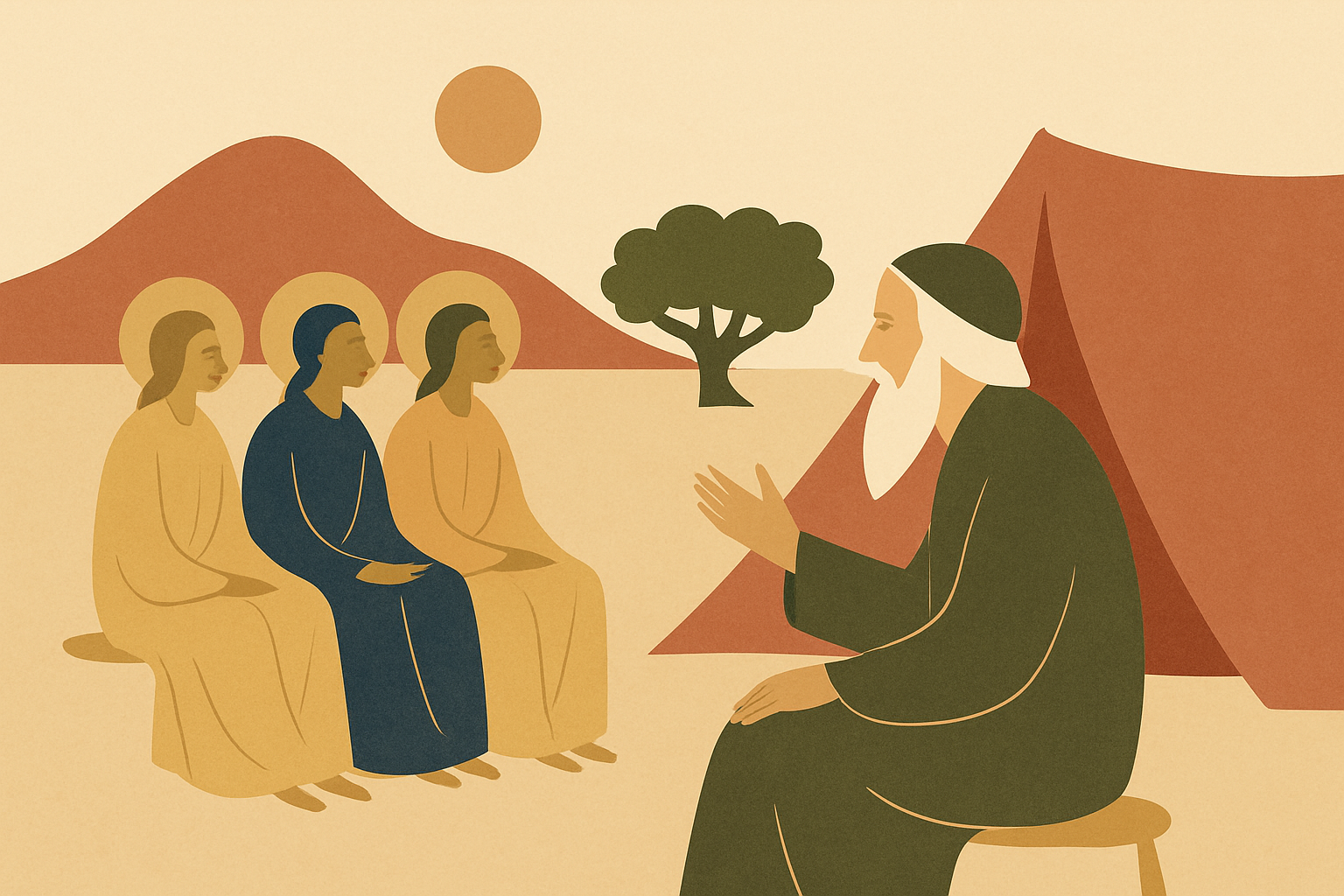
This Week’s Parasha in Simple Words: Va'yera begins as Abraham is sitting at the entrance of his tent in the heat of the day. God appears to him. Abraham looks up and sees three men standing nearby. He runs to greet them, bows, and offers them water, rest, and food. He hurries to Sarah and asks her to prepare cakes, and he selects a tender calf for a servant to prepare. The guests eat, and then ask Abraham where Sarah is. They say that in a year, Sarah will have a son. Sarah, listening from the tent, laughs to herself because she and Abraham are old. God asks Abraham why Sarah laughed and says nothing is too hard for God. Sarah denies laughing, but God says she did.
The men get up to leave and look toward Sodom. God decides to tell Abraham that He is going to destroy Sodom and Gomorrah because their sin is very great. Abraham stands before God and pleads for the cities, asking if God would spare them if there are fifty righteous people. God agrees. Abraham continues to lower the number, down to ten. God says He will not destroy the cities if there are ten righteous people.
Two of the men, who are actually angels, arrive in Sodom. Lot, Abraham’s nephew, invites them to his house and prepares a meal. The men of Sodom surround the house and demand Lot hand over his guests. Lot refuses and offers his daughters instead, but the crowd tries to break in. The angels pull Lot inside and strike the men outside with blindness. The angels tell Lot to gather his family and leave, because the city will be destroyed. Lot’s sons-in-law think he is joking and do not come. At dawn, the angels urge Lot, his wife, and his two daughters to flee. They are told not to look back. As they flee, God rains down sulfur and fire on Sodom and Gomorrah. Lot’s wife looks back and becomes a pillar of salt. Lot and his daughters escape to a cave. Believing they are the last people left, the daughters get their father drunk and each has a child by him. The older daughter’s son is Moab, and the younger’s is Ben-Ammi.
Abraham moves to Gerar. King Abimelech takes Sarah, thinking she is Abraham’s sister. God appears to Abimelech in a dream and warns him. Abimelech returns Sarah to Abraham, gives him gifts, and allows him to settle in the land. Abraham prays, and God heals Abimelech and his household, who had been unable to have children because of Sarah.
God remembers Sarah, and she gives birth to Isaac. Abraham circumcises Isaac at eight days old. Sarah says God has brought her laughter. Isaac grows, and at a feast, Sarah sees Ishmael mocking. She tells Abraham to send Hagar and Ishmael away. God tells Abraham to listen to Sarah. Hagar and Ishmael wander in the desert, run out of water, and Hagar cries. God hears Ishmael’s voice, shows Hagar a well, and promises to make Ishmael a great nation. Ishmael grows up in the desert and becomes an archer.
Abimelech and his general Phicol approach Abraham to make a peace treaty. Abraham complains that Abimelech’s servants seized his well. They make a covenant at Be’er Sheva, and Abraham plants a tamarisk tree there and calls on God’s name.
After these events, God tests Abraham by telling him to take Isaac to the land of Moriah and offer him as a burnt offering. Abraham rises early, takes Isaac and two servants, and sets out. On the third day, Abraham and Isaac go up the mountain alone. Isaac asks where the lamb is, and Abraham says God will provide. Abraham builds an altar, binds Isaac, and is about to sacrifice him when an angel calls out and tells him not to harm the boy. Abraham sees a ram caught in a bush and offers it instead. The angel tells Abraham that because he did not withhold his son, God will bless him and his descendants. The parasha ends with news that Abraham’s brother Nahor has children, including Bethuel, the father of Rebekah.
An Idea from the Parasha: One of the most powerful lessons in Va'yera is the way Abraham pleads for the people of Sodom. Even though their actions are described as very wicked, Abraham argues with God, asking Him to spare the cities for the sake of the righteous. This teaches us about the importance of compassion and the value of every individual. Abraham’s willingness to stand up for others, even those he does not know and who may not deserve it, shows a deep sense of justice and mercy. It reminds us that we should care about the fate of others and not be quick to judge or give up on people, always seeking the good and hoping for their redemption.
Created by Rabbi Ari (AI)