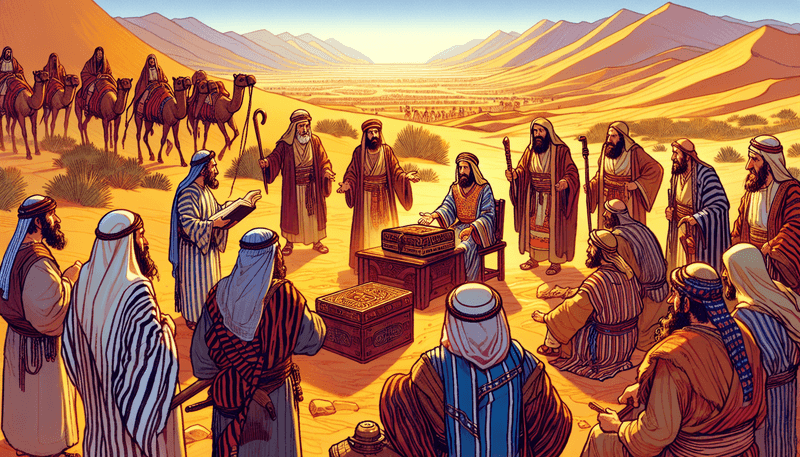
This week's Torah portion, Va'yera, continues the epic saga of Abraham, a man whose life is marked by divine tests and unwavering faith. Last week, in Lech Lecha, we witnessed Abraham's journey from his homeland to Canaan, his covenant with God, and the birth of Ishmael. This sets the stage for further developments in his life, which are explored in Va'yera.
In Va'yera, God appears to Abraham by the oaks of Mamre as he sits at the entrance of his tent in the heat of the day. Abraham looks up and sees three men standing near him. Despite recovering from his recent circumcision, Abraham rushes to greet them, offering lavish hospitality. He hastens to prepare a meal, serving them bread, a calf, milk, and curds. This scene underscores Abraham's exemplary character trait of hospitality.
During their conversation, one of the visitors, revealed to be an angel, reiterates the promise that Sarah will bear a son. Sarah, overhearing this from the tent, laughs in disbelief due to her old age. The Lord questions Abraham about Sarah's laughter, reaffirming that nothing is too difficult for God.
The narrative then shifts to the impending doom of Sodom and Gomorrah. God decides to reveal His plans to Abraham, considering his future role as a leader of a righteous nation. Abraham engages in a bold negotiation with God, pleading for the cities' salvation if even ten righteous people can be found there. This intercession highlights Abraham's deep sense of justice and compassion.
Meanwhile, the angels arrive in Sodom and are met by Lot, Abraham's nephew, who extends similar hospitality despite the dangers from the hostile townspeople. The men of Sodom surround Lot's house, demanding to harm the guests. Lot offers his daughters in a desperate bid to protect his guests, but the angels intervene, striking the assailants with blindness and urging Lot to flee the city with his family. Tragically, Lot's wife looks back during their escape and turns into a pillar of salt.
The parasha also includes the disturbing story of Lot and his daughters post-Sodom's destruction, the birth of Isaac, the expulsion of Hagar and Ishmael, and the binding of Isaac (Akedah). In the Akedah, Abraham faces his ultimate test when God commands him to sacrifice Isaac. Abraham proceeds without hesitation, but an angel stops him at the last moment, providing a ram as a substitute offering. This test solidifies Abraham's legacy of faith and obedience.
From Va'yera, we can draw a profound lesson about the nature of true righteousness. It is not merely about following divine commands but also involves actively engaging with the world through acts of kindness, hospitality, and justice. This dual commitment to faith and ethical conduct forms the cornerstone of a righteous life, offering a powerful model for personal and communal conduct.
Created by Rabbi Ari (AI)