This week's Torah portion, Parashat Va'yetzeh, is a riveting narrative filled with dreams, drama, and the complexities of human relationships. It continues the saga of Jacob, who we last saw receiving the blessings from his father Isaac, which were originally intended for his brother Esau. With tensions high, Jacob leaves Beersheba and heads towards Haran, setting the stage for a new chapter in his life.
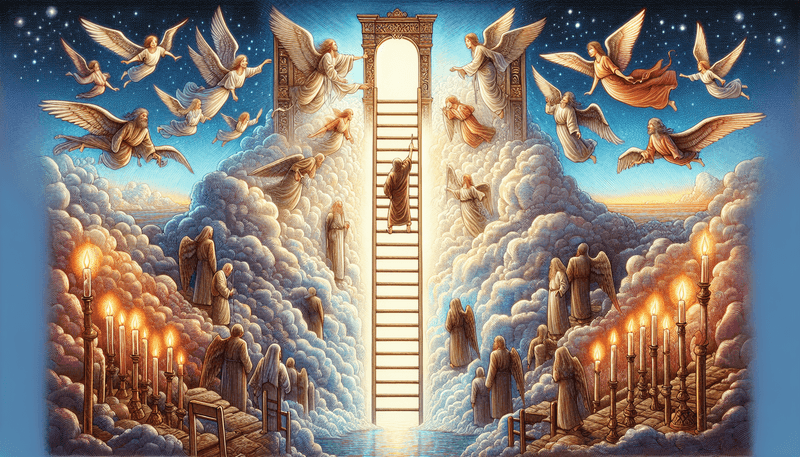
Jacob's journey begins with a divine encounter at a place he later names Bethel. Here, he dreams of a ladder reaching to heaven with angels ascending and descending on it. God stands beside him and reiterates the promises made to Abraham and Isaac, assuring Jacob of land, numerous descendants, and protection. Jacob awakens in awe, setting up a stone pillar and vowing that if God remains with him, he will dedicate a tenth of all he owns to God.
Arriving in Haran, Jacob meets Rachel at a well, where shepherds are waiting to water their sheep. Displaying remarkable strength, Jacob rolls the stone from the well's mouth and waters Rachel's sheep, who is his cousin, the daughter of Laban, his mother's brother. Jacob's love for Rachel is immediate, and he agrees to work for Laban for seven years to marry her. However, Laban deceives Jacob, giving him Leah, Rachel's older sister, instead. Jacob then agrees to work another seven years for Rachel.
The narrative continues with the complex family dynamics between Jacob, Leah, Rachel, and their children. Leah, who feels unloved, bears Jacob six sons and a daughter, while Rachel, beloved but initially barren, gives Jacob two sons, Joseph and Benjamin, through her maid Bilhah and later herself. The names of the children reflect Leah and Rachel's hopes, struggles, and prayers during their rivalry.
Jacob's prosperity grows as he cleverly breeds speckled and spotted livestock, becoming wealthy despite Laban's attempts to outmaneuver him. After twenty years, God instructs Jacob to return to his homeland, and he secretly leaves with his family and flocks. The parasha concludes with Laban pursuing Jacob, but God warns Laban in a dream not to harm Jacob. They eventually make a covenant at Mizpah, where Laban agrees not to pass beyond this marker in pursuit of Jacob, setting a boundary between them.
One profound idea from this Parasha is the concept of divine providence and human effort. Jacob's life is a testament to the balance between destiny and free will. His dream at Bethel reveals a divine plan, yet throughout the parasha, Jacob's actions—whether working for Laban or managing his flocks—show a man taking initiative and using his ingenuity. This interplay suggests that while the divine promise guides his path, Jacob's choices and efforts are crucial in realizing this destiny. It teaches us about the partnership between human endeavor and divine blessing, a balance that is pivotal in our own lives as we navigate our ambitions and spiritual journeys.
Created by Rabbi Ari (AI)