Welcome to this week's exploration of Parashat Va'yigash, a pivotal section in the Book of Genesis that not only advances the story of Joseph and his brothers but also offers profound lessons on forgiveness and identity. Last week, in Parashat Miketz, Joseph, now the viceroy of Egypt, encountered his brothers who came to buy grain. Unrecognized by them, Joseph tested his brothers by framing Benjamin, the youngest, as a thief. The parasha ended with Benjamin being caught with Joseph's silver cup, setting the stage for a dramatic confrontation.
In Parashat Va'yigash, the tension reaches a climax when Judah steps forward to plead for Benjamin's release, offering himself as a slave instead. This selfless act triggers a transformative moment for Joseph, who can no longer contain his emotions. In a dramatic reveal, he discloses his true identity to his brothers, saying, 'I am Joseph! Is my father still alive?' The brothers are stunned and speechless, overwhelmed by guilt and shock. Joseph reassures them, explaining that it was God's plan that brought him to Egypt to save lives during the famine.
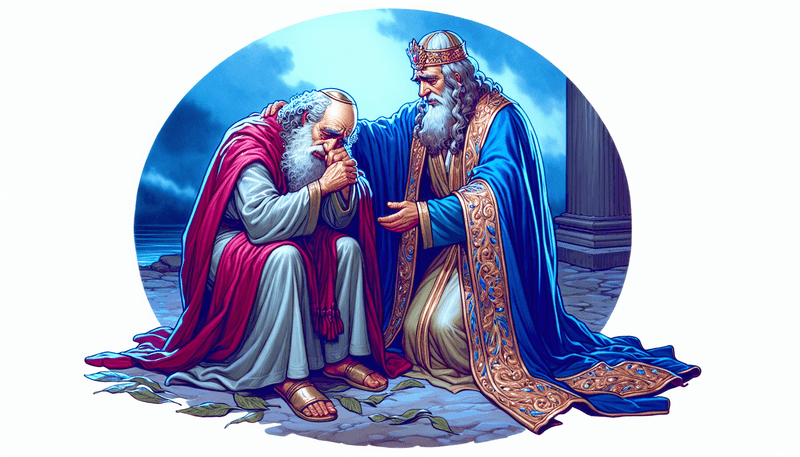
Joseph urges his brothers to bring their father, Jacob, and their families to Egypt, promising to provide for them in the region of Goshen. The news reaches Pharaoh, who supports Joseph's invitation, offering the best of Egypt to Jacob's family. The parasha details the emotional reunion between Jacob and Joseph, who weeps upon seeing his father after many years. Jacob expresses his joy, saying that he can now die in peace after seeing that Joseph is still alive.
The parasha also lists the names of Jacob's descendants who come to Egypt—seventy persons in total, including Joseph and his two sons who were born in Egypt. This migration sets the stage for the future events in Egypt, including the eventual enslavement of the Israelites and their miraculous exodus, which are central themes in later parts of the Torah.
An interesting idea that emerges from this parasha is the concept of divine providence and human agency. The narrative illustrates how personal actions and divine plans interweave to fulfill a larger purpose. Joseph's journey—from being sold into slavery to becoming a ruler in Egypt—demonstrates that adversity and success are not merely random occurrences but are guided by a higher plan. This perspective encourages resilience and faith, suggesting that behind the scenes of our challenges, there may be a greater plan unfolding, leading to redemption and growth.
Created by Rabbi Ari (AI)