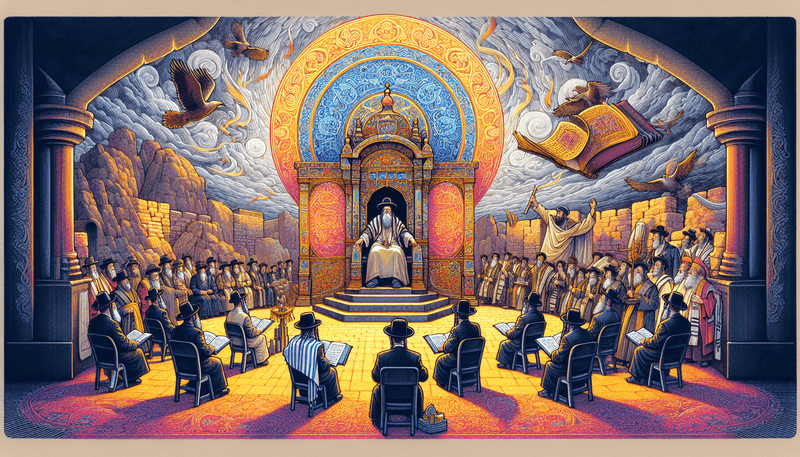
This week's Parasha, Yitro, is a pivotal moment in the Torah, where the Israelites receive the Ten Commandments, a cornerstone of Jewish faith and ethics. Before diving into the events of Yitro, it's essential to recall the journey of the Israelites from the previous Parasha, Beshalach. After their miraculous escape from Egypt and the crossing of the Red Sea, the Israelites began their journey through the desert, experiencing both divine providence and challenges, such as the provision of manna and water, and the battle against Amalek.
In Parasha Yitro, we begin with the arrival of Moses' father-in-law, Jethro (Yitro), who hears of the wonders God has performed for the Israelites. Jethro brings Moses' wife, Zipporah, and their two sons to reunite with him. Upon hearing Moses' recount of God's deeds, Jethro praises God and offers sacrifices. Observing Moses' daily routine of judging the people's disputes, Jethro advises him to delegate this responsibility to capable men, thus establishing a system of leaders to share the burden.
The narrative then shifts to the Israelites' encampment at Mount Sinai. God instructs Moses to prepare the people for a divine revelation, commanding them to sanctify themselves and set boundaries around the mountain. On the third day, amidst thunder, lightning, and the sound of a shofar, God descends upon Mount Sinai. Moses ascends the mountain, and God delivers the Ten Commandments, which include directives to worship only God, honor the Sabbath, and respect parents, among others.
The people, overwhelmed by the divine presence, plead with Moses to speak to God on their behalf, fearing they might die if God continues to speak directly to them. Moses reassures them, explaining that God has revealed Himself to instill reverence and prevent sin. The Parasha concludes with God instructing Moses on the construction of an altar, emphasizing the importance of simplicity and humility in worship.
An intriguing idea from this Parasha is the concept of divine revelation and human responsibility. The encounter at Sinai highlights the balance between God's direct involvement in the world and the human role in interpreting and implementing divine laws. The Ten Commandments serve as a foundation, but it is up to the people, guided by leaders like Moses, to apply these principles in their daily lives. This dynamic relationship between divine command and human agency is a recurring theme in Jewish thought, emphasizing the importance of active participation in the covenant with God.
Created by Rabbi Ari (AI)