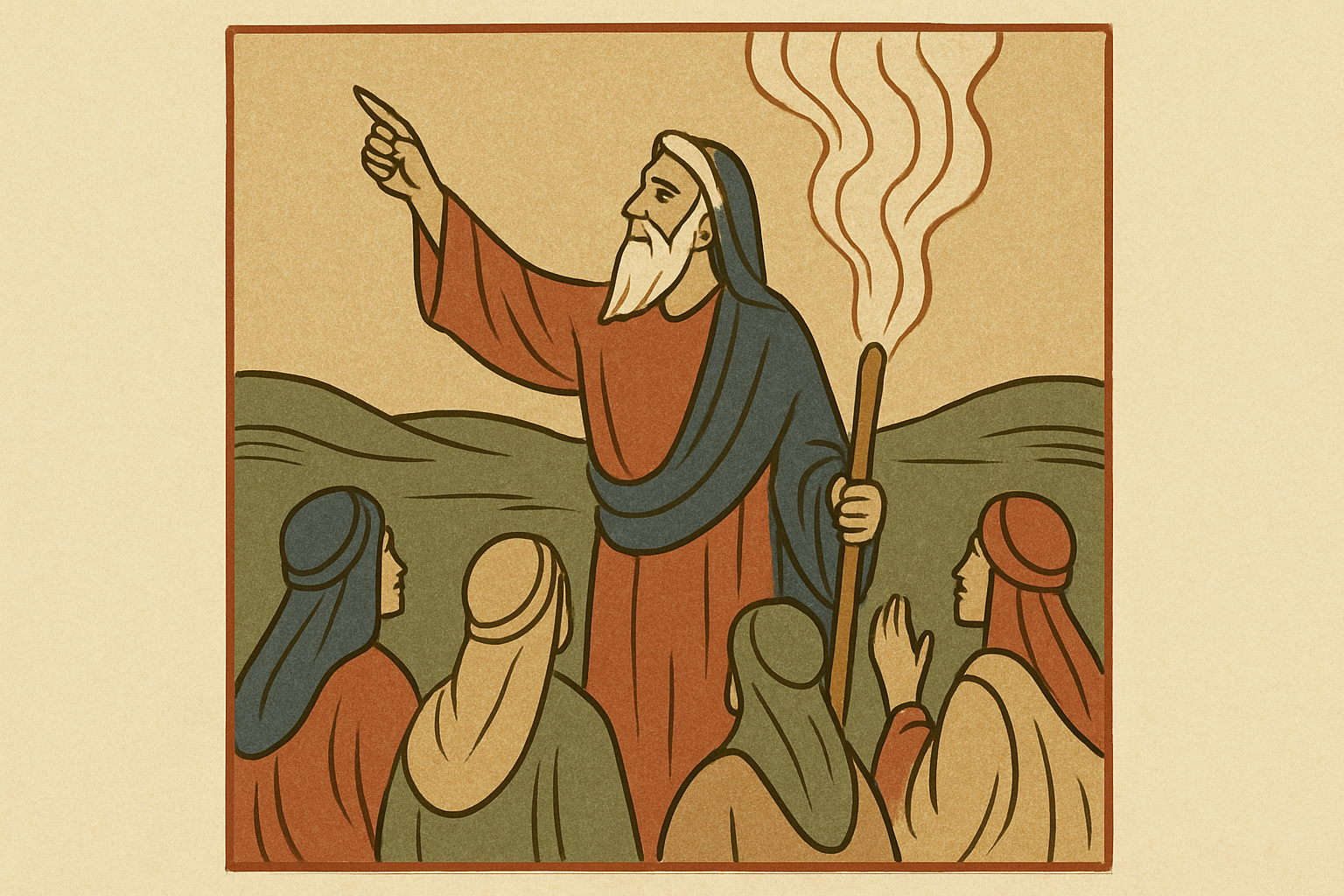
Last week in Parashat Va'era, we saw the beginning of the dramatic confrontation between Moses, Aaron, and Pharaoh. God sent Moses to demand the release of the Israelites from slavery in Egypt. Pharaoh refused, and as a result, God brought seven devastating plagues upon Egypt: blood, frogs, lice, wild animals, pestilence, boils, and hail. Despite the suffering, Pharaoh's heart remained hardened, and he would not let the Israelites go. This sets the stage for Parashat Bo, where the final and most severe plagues unfold, and the Israelites prepare for their long-awaited freedom.
In Parashat Bo, God tells Moses to go to Pharaoh once more, warning him of the upcoming plagues. The eighth plague is locusts. Moses and Aaron warn Pharaoh that if he does not let the Israelites go, locusts will swarm the land and consume everything left after the hail. Pharaoh's servants beg him to let the Israelites go, but Pharaoh only offers to let the men leave. Moses insists that everyone must go. Pharaoh refuses, and God brings a wind that brings locusts over Egypt. The locusts cover the land and eat every plant and fruit left after the hail. Pharaoh quickly calls Moses and Aaron, admits his sin, and asks them to pray for the plague to end. Moses prays, and God sends a wind that blows the locusts away. But again, Pharaoh's heart is hardened, and he does not let the Israelites go.
God then tells Moses to stretch out his hand toward the sky, and the ninth plague, darkness, falls over Egypt. For three days, the Egyptians cannot see each other or move from their places, but the Israelites have light where they live. Pharaoh calls Moses and says the people can go, but their flocks and herds must stay. Moses refuses, saying they need their animals to serve God. Pharaoh becomes angry and tells Moses never to appear before him again, or he will die. Moses agrees, saying he will not see Pharaoh's face again.
God tells Moses that one more plague will come, after which Pharaoh will drive the Israelites out completely. God instructs the Israelites to ask their Egyptian neighbors for silver and gold items. Moses tells Pharaoh that at midnight, God will pass through Egypt, and every firstborn will die, from Pharaoh's son to the firstborn of the slave and even the animals. There will be a great cry in Egypt, but the Israelites will be unharmed. Moses leaves Pharaoh in anger.
God gives Moses and Aaron the first commandments for the Israelites as a people. The month of the Exodus will be the first month of the year. On the tenth day of the month, each family must take a lamb, keep it until the fourteenth day, and then slaughter it at twilight. They must put some of the blood on the doorposts and eat the lamb roasted, with matzah and bitter herbs. They must not leave any of it until morning. They must eat it quickly, dressed and ready to leave. God will pass through Egypt that night, striking down the firstborn, but will pass over the houses with blood on the doorposts. This event is to be remembered every year as a festival to God, called Pesach (Passover), for seven days. During this time, no leavened bread may be eaten or found in their homes. The Israelites are commanded to teach their children about this event.
Moses relays these instructions to the elders of Israel. The Israelites do as commanded. At midnight, God strikes down all the firstborn in Egypt. Pharaoh, his servants, and all Egypt rise in the night with a great cry. Pharaoh calls Moses and Aaron and tells them to leave with all the Israelites and their animals. The Egyptians urge the Israelites to leave quickly. The Israelites take their dough before it rises, and the Egyptians give them silver, gold, and clothing as requested.
The Israelites leave Egypt, about six hundred thousand men on foot, plus women and children, along with a mixed multitude and their livestock. They bake matzah from the dough they brought, since it did not have time to rise. The Torah notes that the Israelites lived in Egypt for 430 years, and on that very day, God brought them out.
God gives further laws about the Passover offering: no foreigner may eat it, but a slave who is circumcised may. It must be eaten in one house, and no bone may be broken. All of Israel must observe this law. When the Israelites settle in the land, they must dedicate every firstborn male, human and animal, to God. Firstborn animals are to be sacrificed, and firstborn sons are to be redeemed. The Israelites are told to explain these laws to their children, as a remembrance of how God brought them out of Egypt with a mighty hand.
One powerful idea from this Parasha is the importance of memory and education in shaping a people. The Torah repeatedly commands the Israelites to remember the Exodus and to teach it to their children. The rituals of Passover are not just about commemorating the past, but about making the story come alive for every generation. By reliving the experience, asking questions, and telling the story, each person becomes part of the journey from slavery to freedom. This transforms the Exodus from a historical event into a living foundation of identity and faith, ensuring that its lessons endure through time.
Created by Rabbi Ari (AI)