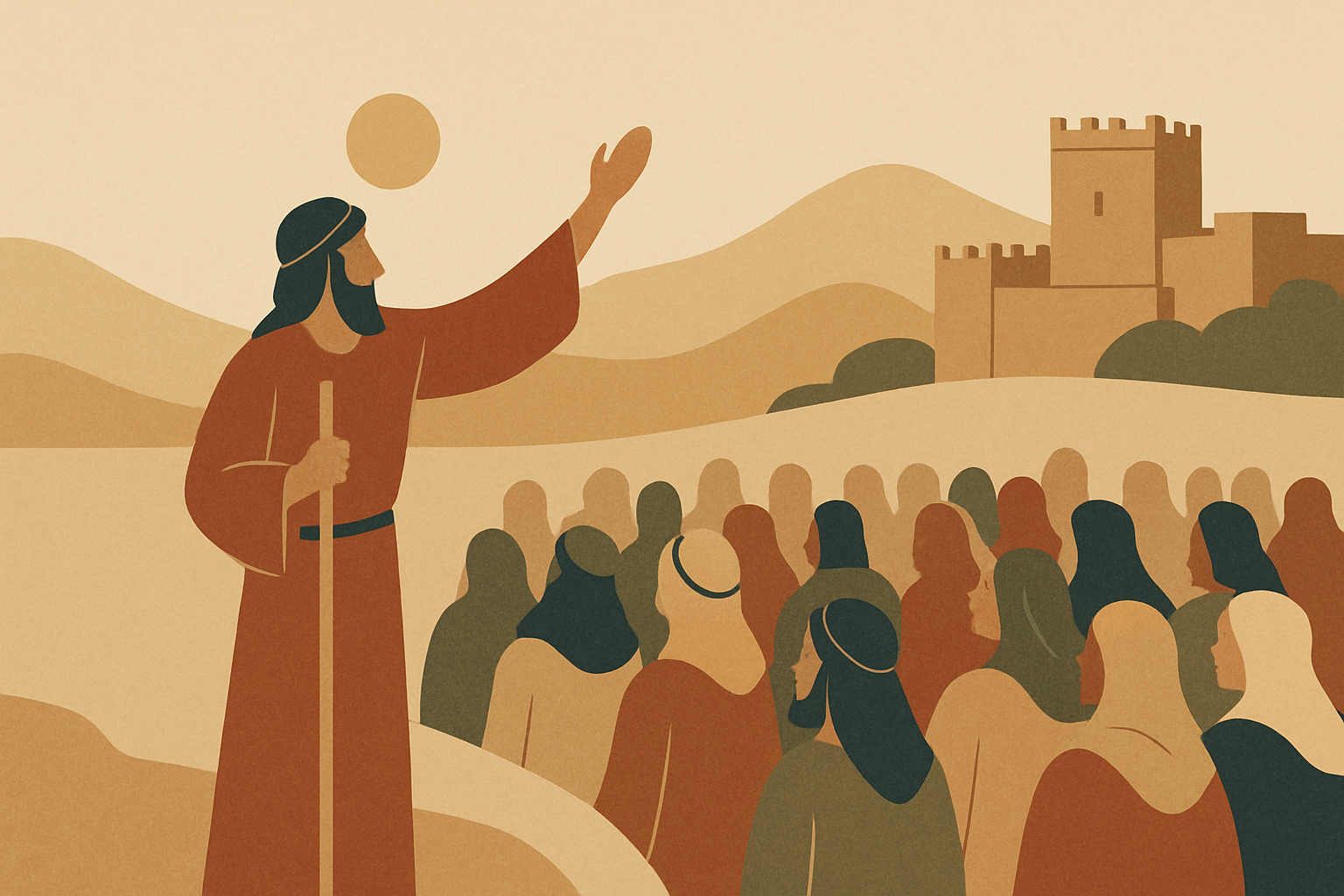
Introduction: As we begin the book of Devarim (Deuteronomy), we transition from the narrative and laws of Bamidbar (Numbers), where the Israelites wandered in the desert, faced challenges, and received commandments. The previous parasha, Matot-Masei, concluded with the Israelites camped on the plains of Moab, poised to enter the Land of Israel. They had just reviewed their journeys, received laws about dividing the land, and heard about the cities of refuge. Now, in Devarim, Moshe stands before the new generation, ready to deliver his final speeches before his death and their entry into the land.
The Parasha in Simple Words: Parashat Devarim opens with Moshe speaking to all of Israel on the east side of the Jordan River. He begins by reminding them that it has been forty years since they left Egypt, and now they are about to enter the land God promised to their ancestors. Moshe recalls how, at God’s command, he told the people it was time to leave Mount Sinai (Horeb) and journey toward the Promised Land. He describes how the people had grown numerous, like the stars, and how he could not lead them alone. Therefore, he appointed wise and respected leaders from each tribe to help judge and guide the people.
Moshe reminds them of the instructions he gave these leaders: to judge fairly, not to show favoritism, and not to be afraid of anyone, because judgment belongs to God. Any difficult cases were to be brought to Moshe himself. He then recounts how they traveled through the wilderness to Kadesh Barnea, on the edge of the land. There, Moshe told them to go up and take possession of the land, as God had promised. But the people suggested sending spies first. Moshe agreed and chose twelve men, one from each tribe, to scout the land. The spies returned with fruit and a report, but they discouraged the people, saying the inhabitants were too strong. The people became afraid and complained, saying God hated them and brought them out of Egypt only to be destroyed. Moshe tried to reassure them that God would fight for them, as He had in Egypt and the desert, but they did not trust God.
Because of this lack of faith, God declared that none of that generation, except for Kalev ben Yefuneh and Yehoshua bin Nun, would enter the land. Even Moshe was told he would not enter because of the people’s actions. The people then tried to go up and fight on their own, but God was not with them, and they were defeated by the Amorites. Afterward, they wandered in the desert for many years. Moshe then describes how, after many years, God told them to turn north and pass through the territories of Edom, Moav, and Ammon. God commanded them not to fight these nations or take their land, because it was given to the descendants of Esav (Edom), Lot (Moav and Ammon). They were to buy food and water from these nations and not provoke them.
Next, Moshe recalls how God told them to fight Sihon, king of the Amorites, because his land was given to Israel. Moshe sent messengers to Sihon with a peaceful request to pass through, but Sihon refused and came out to fight. God delivered Sihon and his people into Israel’s hands, and they captured all his cities, destroying the men, women, and children, but keeping the livestock and goods. They did not approach the land of Ammon, as God had commanded. Then, they turned and went up the road to Bashan, where Og, king of Bashan, came out to fight them. God told Moshe not to fear, and Israel defeated Og and his people, capturing all his cities. The land of Sihon and Og, from the Arnon River to Mount Hermon, was given to the tribes of Reuven, Gad, and half of Menashe. Moshe reminds these tribes that their warriors must cross the Jordan to help their brothers conquer the rest of the land, and only then can they return to their inheritance.
Finally, Moshe encourages Yehoshua in front of all Israel, telling him not to fear, because God will fight for them as He did with Sihon and Og. Moshe also tells the people that he pleaded with God to let him enter the land, but God refused and told him to go up Mount Pisgah to see the land from afar. Moshe is told to strengthen Yehoshua, who will lead the people into the land. The parasha ends with the Israelites camped in the valley near Beit Peor.
An Idea from the Parasha: One powerful idea from Parashat Devarim is the importance of memory and honest self-reflection. Moshe does not simply retell the story of the past forty years; he highlights the mistakes, fears, and failures of the people, as well as God’s faithfulness and mercy. This act of remembering is not meant to shame, but to teach and prepare the new generation for the challenges ahead. By reviewing their history, Moshe helps the people understand the consequences of their actions and the importance of trust in God. This teaches us that true growth comes from facing our past honestly, learning from it, and using those lessons to build a better future. The process of remembering, even the difficult moments, is essential for personal and communal transformation.
Created by Rabbi Ari (AI)