Last week in Parashat Korach, we read about the dramatic rebellion led by Korach and his followers against Moses and Aaron. The earth swallowed the rebels, and a plague broke out among the Israelites, but Aaron stopped it with incense. God then confirmed Aaron’s special status by making his staff blossom and produce almonds, showing the people who was chosen to serve as Kohen Gadol. These events set the stage for this week’s Parasha, as the Israelites continue their journey through the wilderness, still struggling with faith, leadership, and the laws that will define their nation.
This week’s Parashat Hukkat opens with a unique law: the ritual of the red heifer. God commands Moses and Aaron to take a completely red cow, without blemish and never used for work. The cow is given to Eleazar the priest, who takes it outside the camp and slaughters it. Its blood is sprinkled toward the Tent of Meeting seven times. The entire cow is burned, along with cedar wood, hyssop, and crimson wool. The ashes are collected and used to purify people who have become ritually impure through contact with a dead body. Anyone involved in preparing the ashes becomes impure until evening, but the ashes themselves are used to make people pure. The Torah details the process: a person who touches a corpse becomes impure for seven days. On the third and seventh days, they must be sprinkled with water mixed with the red heifer’s ashes. If they do not purify themselves, they remain impure and are cut off from the community.
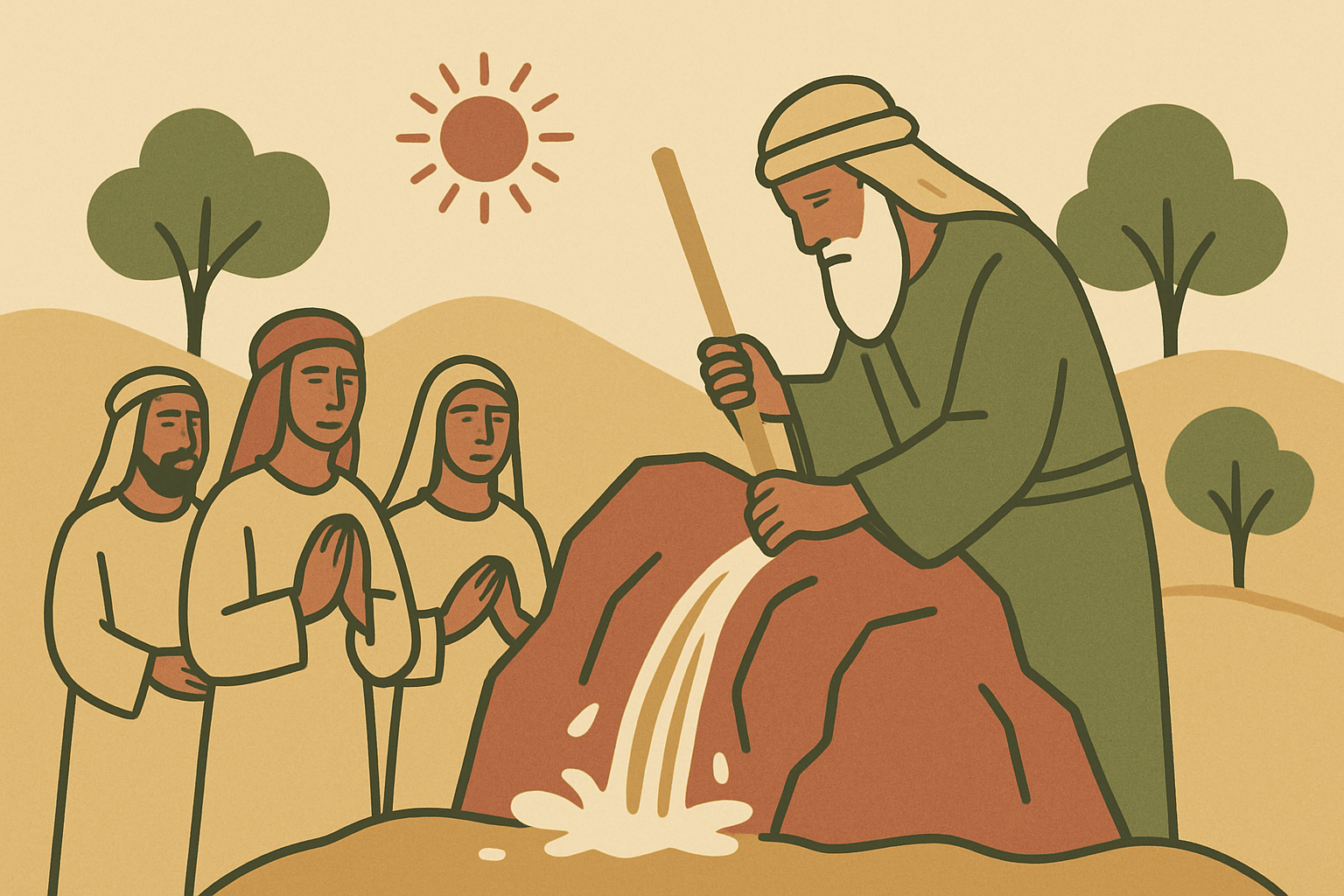
The narrative then jumps to the fortieth year of the Israelites’ wandering. Miriam, Moses and Aaron’s sister, dies and is buried in Kadesh. Immediately after, the people complain that there is no water. God tells Moses to take his staff, gather the people, and speak to a rock to bring forth water. Instead, Moses strikes the rock twice with his staff, and water gushes out. God tells Moses and Aaron that because they did not trust Him enough to sanctify Him before the people, they will not bring the Israelites into the Promised Land.
The Israelites then try to pass through the land of Edom, but the king refuses and comes out with a large army, so the people turn away. They travel to Mount Hor, where God tells Moses that Aaron’s time has come. Moses, Aaron, and Eleazar go up the mountain. Moses removes Aaron’s priestly garments and puts them on Eleazar. Aaron dies there, and the people mourn him for thirty days.
After Aaron’s death, the Canaanite king of Arad attacks the Israelites and takes some captives. The Israelites vow to God that if He delivers the Canaanites into their hands, they will destroy their cities, and God listens to their prayer. As they continue their journey, the people complain again about the food and water. God sends poisonous snakes among them, and many die. The people repent, and God tells Moses to make a bronze serpent and put it on a pole. Anyone bitten who looks at the bronze serpent lives.
The Israelites continue traveling, and the Torah lists the places they camped. They sing a song of thanks for the well that provided them water. They ask permission to pass through the land of the Amorites, but King Sihon refuses and attacks them. The Israelites defeat Sihon and take his land. Then King Og of Bashan comes out to fight them, but God tells Moses not to fear. The Israelites defeat Og and take his land as well. The Parasha ends with the Israelites encamping in the plains of Moab, across from Jericho.
One powerful idea from this Parasha is the paradox of the red heifer: the same ashes that purify those who are impure also make those who prepare them impure. This teaches us that spiritual growth and helping others often require us to step out of our own comfort zones and sometimes even to take on a burden ourselves. True leadership and service mean being willing to become ‘impure’ for the sake of others’ purification. The Torah is showing us that the path to holiness is not always straightforward or logical, but it is built on self-sacrifice and a willingness to help others, even when it comes at a personal cost.
Created by Rabbi Ari (AI)