Last week in Parashat Shoftim, we learned about the importance of justice, the appointment of judges and officers, the rules for kings, prophets, and priests, and the establishment of cities of refuge. The Torah began to lay out the framework for a just and moral society as the Israelites prepared to enter the Land of Israel. These themes of justice and social responsibility continue and become even more detailed in this week’s Parasha, Ki Tetzeh.
Ki Tetzeh is packed with mitzvot—more than any other Parasha in the Torah. It covers a wide range of laws that touch on almost every aspect of daily life. Here’s what appears explicitly in the Parasha, in simple, modern language:
If you go out to war and see a beautiful woman among the captives, you may take her as a wife, but there are specific rules: she must shave her head, trim her nails, and mourn her family for a month before you can marry her. If you no longer want her, you must let her go free and not sell her or treat her as a slave.
If a man has two wives, one loved and one unloved, and both have sons, the firstborn’s rights cannot be taken away from the unloved wife’s son. The firstborn must receive a double portion of the inheritance.
If a man has a stubborn and rebellious son who does not listen to his parents even after discipline, the parents can bring him to the elders of the city. If the elders agree, the son is put to death to remove evil from among the people.
If someone is executed and hung on a tree, the body must not remain overnight. It must be buried the same day, because a hanging body is a curse to God.
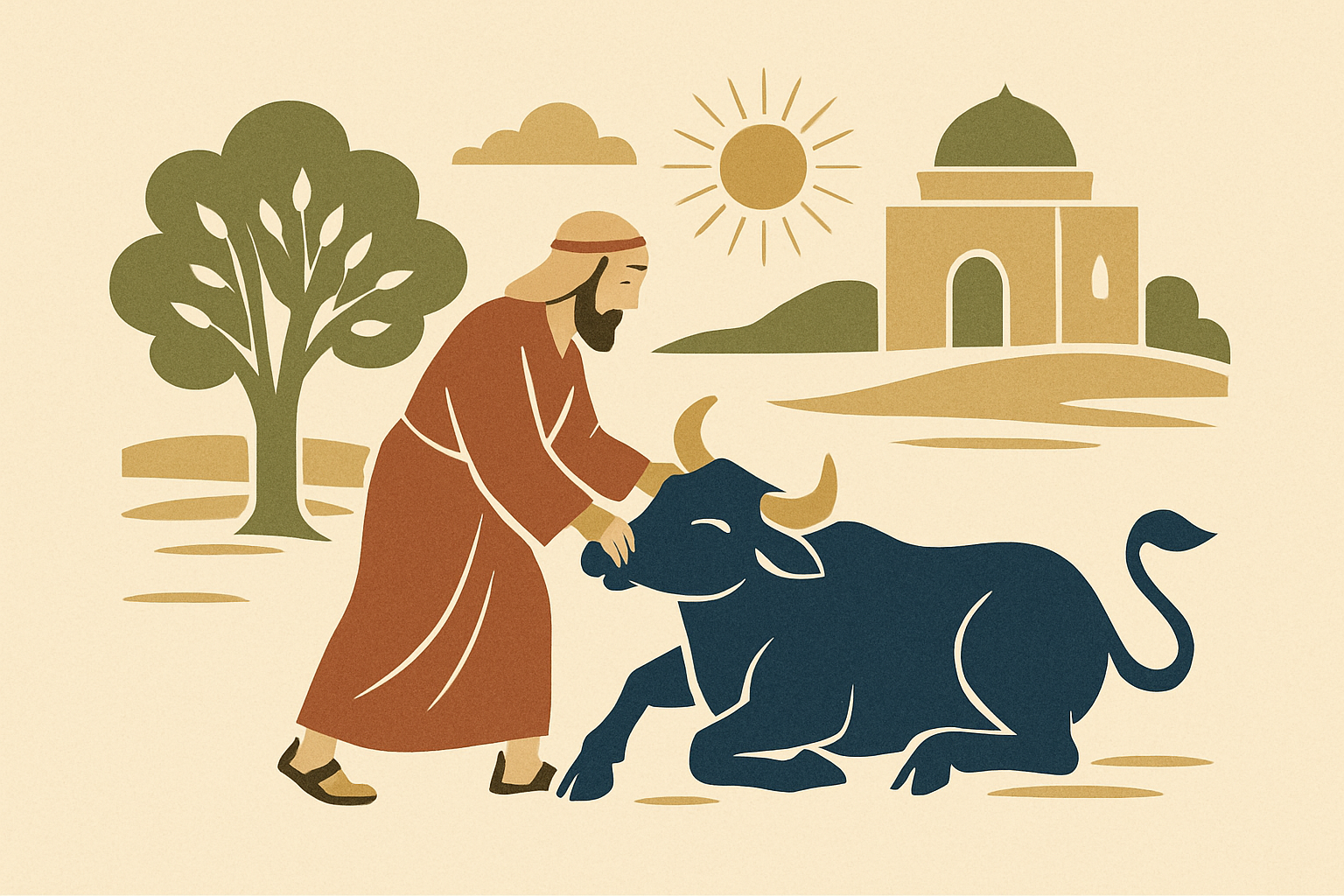
If you see your fellow’s ox or sheep wandering, you must return it. If you don’t know the owner, keep the animal until the owner is found. The same applies to lost clothing or anything your fellow loses. You must not ignore it. If you see your fellow’s donkey or ox fallen on the road, help lift it up.
Women must not wear men’s clothing, and men must not wear women’s clothing. This is considered an abomination to God.
If you find a bird’s nest with the mother sitting on eggs or chicks, you may take the young, but you must send away the mother bird first, so that you will have a good and long life.
When you build a new house, you must make a guardrail for the roof to prevent anyone from falling.
You must not plant your vineyard with two kinds of seeds, plow with an ox and a donkey together, or wear clothing made of wool and linen mixed together.
You must make fringes (tzitzit) on the four corners of your garments.
If a man marries a woman and then claims she was not a virgin, the elders must investigate. If the claim is false, the man is punished and must pay the woman’s father and stay married to her. If the claim is true, the woman is punished by death.
If a man is found lying with a married woman, both must die. If a man rapes a betrothed woman in the city and she does not cry out, both are punished. If it happens in the field, only the man is punished, because she may have cried out and no one heard. If a man rapes a woman who is not betrothed, he must pay her father and marry her, and he can never divorce her.
A man may not marry his father’s former wife.
Men with crushed or severed genitals may not enter the congregation of God. Neither may people born from forbidden unions, Ammonites, or Moabites. However, Edomites and Egyptians may join after three generations.
When the Israelites camp, they must keep the camp holy. If someone becomes impure, they must leave the camp until purified. There must be a designated place outside the camp for relieving oneself, and a tool to cover waste, because God’s presence is in the camp.
Do not return a runaway slave to his master if he seeks refuge with you. He may live among you wherever he chooses.
There must not be male or female prostitutes among the Israelites. You may not bring the earnings of prostitution or of a dog as an offering to God.
Do not charge interest to your fellow Israelite, but you may charge interest to foreigners.
If you make a vow to God, you must fulfill it. If you do not vow, you are not guilty.
If you enter your neighbor’s vineyard, you may eat grapes, but not take any away. If you enter a field of grain, you may pick with your hand, but not use a sickle.
If a man divorces his wife and she marries another, and then is divorced or widowed, the first husband may not remarry her.
If a man is newly married, he is exempt from army service for one year, to bring happiness to his wife.
Do not take a millstone or upper stone as collateral for a loan, because it is essential for life.
If someone kidnaps a fellow Israelite and sells them, the kidnapper must be put to death.
Be careful with tzara’at (skin disease) and follow the instructions of the priests.
If you lend money, do not enter the borrower’s house to take a pledge. Wait outside, and the borrower brings it to you. If the pledge is a poor person’s cloak, return it by sunset so he can sleep in it.
Do not oppress a hired worker, especially a poor or needy one. Pay wages on the same day.
Parents are not to be put to death for their children’s sins, nor children for their parents’ sins. Each person is responsible for their own actions.
Do not pervert justice for strangers or orphans. Do not take a widow’s garment as a pledge. Remember you were slaves in Egypt.
When harvesting, if you forget a sheaf in the field, do not go back for it. Leave it for the stranger, orphan, and widow. The same applies to olives and grapes—leave what remains for the poor.
If there is a dispute, the guilty person may be given lashes, but not more than forty, so as not to degrade him.
Do not muzzle an ox while it is threshing grain.
If a man dies without children, his brother should marry the widow (yibbum). If he refuses, she removes his shoe and spits before the elders, and he is known as "the one whose shoe was removed."
If two men fight and the wife of one grabs the other’s private parts to help her husband, her hand is to be cut off.
Do not have different weights or measures—your weights and measures must be honest and accurate.
Remember what Amalek did to you on the way out of Egypt. When you have rest from your enemies, wipe out the memory of Amalek from under heaven. Do not forget.
One powerful idea from this Parasha is the Torah’s deep concern for human dignity and compassion, even in the midst of so many laws. Whether it’s sending away the mother bird before taking the eggs, returning lost objects, paying workers on time, or not humiliating someone who is punished, the Torah insists that every person—and even animals—deserve respect and kindness. The laws are not just about order, but about building a society where empathy and justice go hand in hand. This teaches us that the details of daily life are opportunities to bring holiness and goodness into the world, and that true spirituality is found in how we treat others, especially the vulnerable.
Created by Rabbi Ari (AI)