Previously on Parashat Vayeshev: Last week, we left off with Joseph, the favored son of Jacob, sold by his brothers and taken down to Egypt. There, he was bought by Potiphar, rose to a position of trust, but was then falsely accused by Potiphar’s wife and thrown into prison. In prison, Joseph interpreted the dreams of Pharaoh’s chief cupbearer and chief baker, predicting the cupbearer’s release and the baker’s execution. Joseph asked the cupbearer to remember him and mention him to Pharaoh, but the cupbearer forgot about Joseph as soon as he was freed.
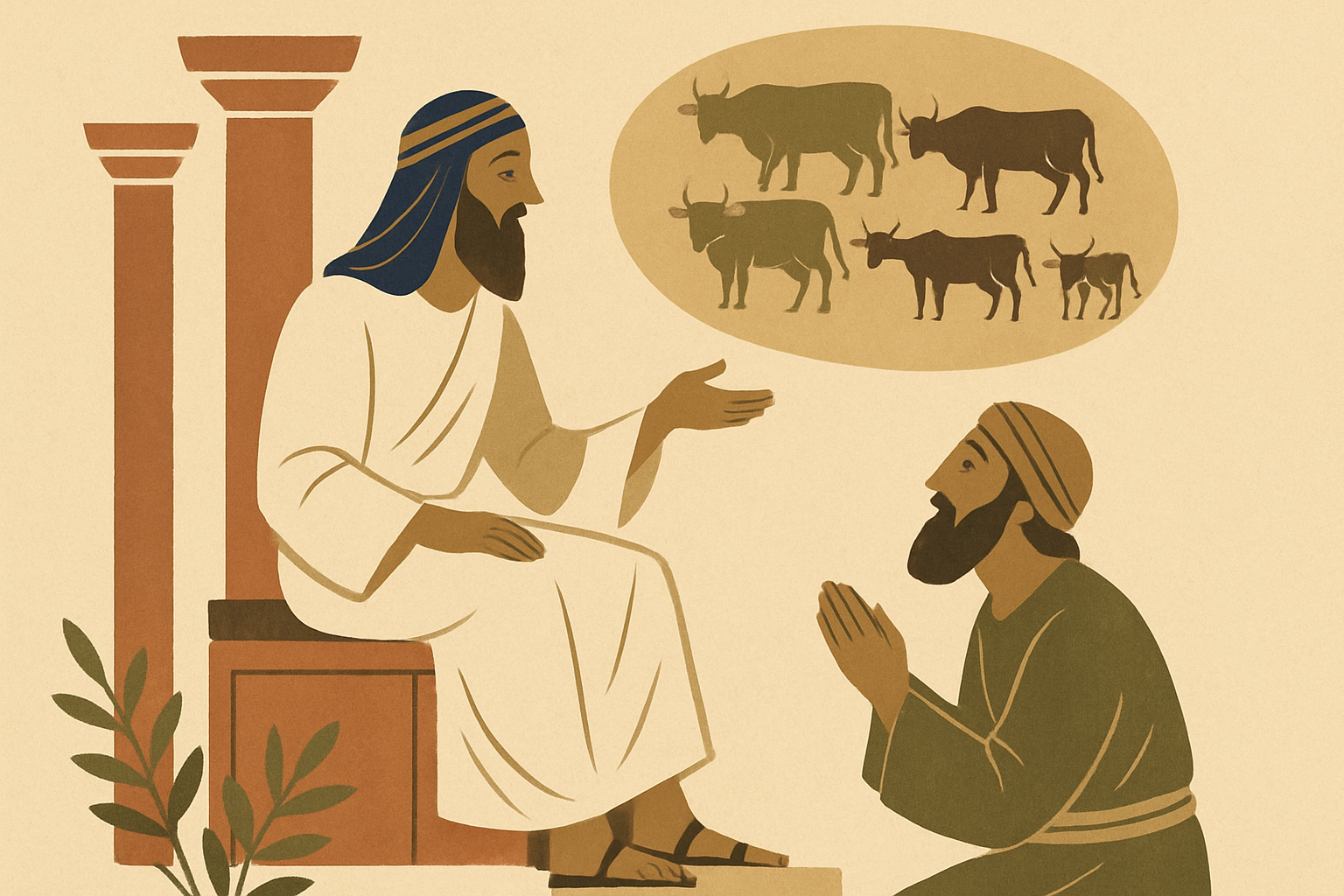
This Week’s Parasha in Simple Words: Two years after Joseph interpreted the dreams in prison, Pharaoh has two troubling dreams. In the first, seven healthy cows come out of the Nile, followed by seven thin, sickly cows that eat the healthy ones. In the second dream, seven healthy ears of grain grow on one stalk, then seven thin, scorched ears swallow them up. Pharaoh is disturbed and calls all his magicians and wise men, but no one can interpret the dreams. The chief cupbearer finally remembers Joseph and tells Pharaoh about him. Joseph is quickly brought from prison, cleaned up, and brought before Pharaoh. Pharaoh tells Joseph his dreams, and Joseph says that both dreams mean the same thing: God is telling Pharaoh what will happen. There will be seven years of plenty in Egypt, followed by seven years of severe famine. Joseph advises Pharaoh to appoint a wise man to oversee the land and store food during the years of plenty to prepare for the famine. Pharaoh is impressed and says that since God has made all this known to Joseph, there is no one as wise as him. Pharaoh appoints Joseph as his second-in-command, gives him his signet ring, dresses him in fine clothes, puts a gold chain on his neck, and gives him an Egyptian name, Tzafnat Paneach. He also gives Joseph Asenath, the daughter of Potiphera, as a wife. Joseph is thirty years old when he stands before Pharaoh. Joseph oversees the collection of food during the seven years of plenty, storing it in the cities. During this time, Joseph has two sons: Manasseh, because God made him forget his troubles and his father’s house, and Ephraim, because God made him fruitful in the land of his suffering. The seven years of plenty end, and the famine begins, just as Joseph predicted. The famine is severe, and people from all lands come to Egypt to buy food from Joseph. Jacob, back in Canaan, hears that there is food in Egypt and sends ten of his sons (all except Benjamin) to buy grain. Joseph recognizes his brothers when they arrive, but they do not recognize him. He speaks harshly to them and accuses them of being spies. They insist they are honest men and tell him about their family, including their youngest brother left at home. Joseph puts them in prison for three days, then tells them that one must stay behind while the rest go home with food and bring back their youngest brother to prove their honesty. The brothers discuss their guilt over what they did to Joseph, not knowing he can understand them. Joseph turns away and weeps, then takes Simeon and has him bound before their eyes. He gives orders to fill their sacks with grain, return their money secretly, and give them provisions for the journey. The brothers return to Canaan and tell Jacob everything that happened. When they find the money in their sacks, they are afraid. Jacob refuses to let Benjamin go, saying he has already lost Joseph and Simeon, and cannot risk losing Benjamin. But the famine continues, and when the food runs out, Jacob tells them to go back to Egypt. Judah promises to take responsibility for Benjamin’s safety. Jacob finally agrees and sends gifts for the Egyptian ruler, as well as double the money to return what was found in their sacks. The brothers arrive in Egypt and are brought to Joseph’s house. They are afraid, thinking they are being accused of stealing. Joseph’s steward reassures them, saying their God and the God of their father put treasure in their sacks. Simeon is released, and the brothers prepare their gifts. Joseph comes home, asks about their father, and sees Benjamin. He is overcome with emotion and leaves the room to weep. He returns, composes himself, and orders the meal to be served. The brothers are seated in order of their age, which amazes them. Joseph gives Benjamin a portion five times larger than the others. They eat and drink with Joseph.
An Idea from the Parasha: One of the most powerful lessons in this parasha is the way Joseph responds to his brothers. Even though he has every reason to be angry and take revenge, Joseph chooses a different path. He tests his brothers, but he also shows them kindness and ultimately seeks reconciliation. This teaches us about the power of forgiveness and the importance of looking for the good in others, even when we have been wronged. Joseph’s ability to see God’s hand in his life, and to act with compassion rather than bitterness, is a model for how we can rise above our own pain and help bring healing to our relationships and our world.
Created by Rabbi Ari (AI)