Last week in Parashat Bereshit, we read about the creation of the world, Adam and Eve in the Garden of Eden, the first sin, and the generations that followed. Humanity multiplied, but so did corruption and violence. By the end of Bereshit, God regretted creating humans because of their evil ways, but found one righteous man: Noah. This sets the stage for this week's dramatic story.
This week in Parashat Noah, the Torah tells us that Noah was a righteous and blameless man in his generation, and he walked with God. God saw that the earth was filled with violence and corruption, and decided to bring a flood to destroy all living things. God instructed Noah to build an ark out of gopher wood, with specific dimensions and three levels, and to coat it with pitch inside and out. Noah was told to bring his wife, his three sons—Shem, Ham, and Japheth—and their wives into the ark. He was also commanded to bring two of every living creature, male and female, and seven pairs of every clean animal and bird, along with food for everyone.
Noah did everything God commanded. When Noah was 600 years old, the floodwaters came. The fountains of the deep burst, and the windows of the heavens opened. Rain fell for forty days and forty nights. Noah, his family, and all the animals entered the ark, and God sealed them inside. The waters rose, covering even the highest mountains, and all life outside the ark perished. The flood lasted 150 days.
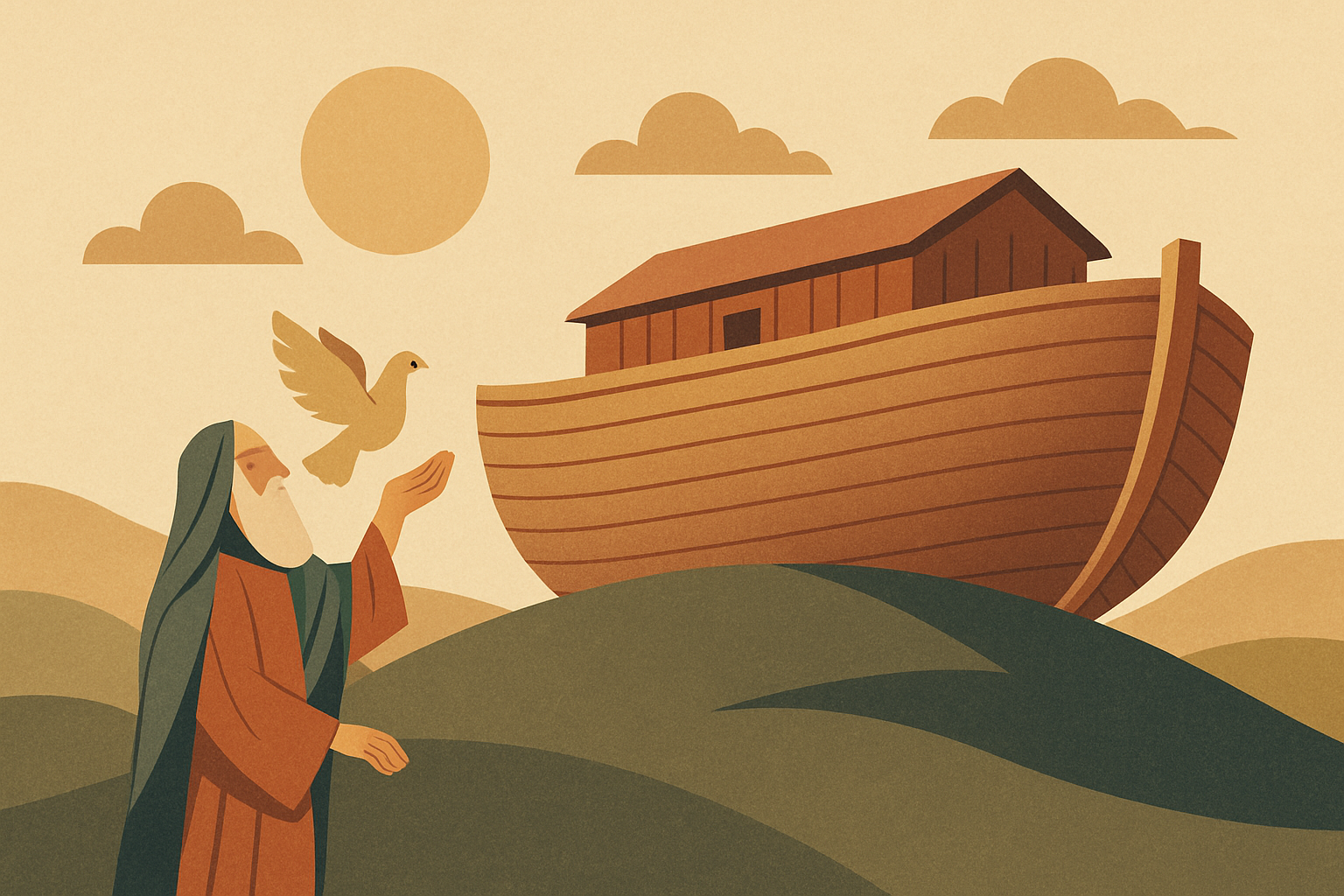
God remembered Noah and all in the ark, and caused a wind to pass over the earth, making the waters recede. The ark came to rest on the mountains of Ararat. After forty days, Noah opened the window and sent out a raven, which flew back and forth. Then he sent a dove, but it found no place to rest and returned. After seven days, he sent the dove again, and it returned with an olive leaf. After another seven days, the dove did not return, signaling that the earth was drying. God told Noah to leave the ark with his family and all the animals.
Noah built an altar and offered sacrifices from the clean animals and birds. God smelled the pleasing aroma and promised never again to curse the ground because of humans, nor to destroy all living things with a flood. God blessed Noah and his sons, telling them to be fruitful and multiply and fill the earth. God permitted them to eat animals, but forbade eating flesh with its blood. God also warned that anyone who sheds human blood will have their blood shed by humans, for people are made in God's image.
God established a covenant with Noah, his descendants, and every living creature, promising never again to destroy the earth with a flood. As a sign of this covenant, God set a rainbow in the clouds. Whenever the rainbow appears, it is a reminder of this everlasting promise.
The Torah then lists the descendants of Noah's sons, from whom all the nations of the world spread out. The story continues with the incident of Noah planting a vineyard, becoming drunk, and lying uncovered in his tent. Ham saw his father's nakedness and told his brothers, who respectfully covered Noah without looking. When Noah awoke, he cursed Canaan, Ham's son, and blessed Shem and Japheth.
The Parasha concludes with the story of the Tower of Babel. All people spoke one language and settled in Shinar. They decided to build a city and a tower reaching the heavens to make a name for themselves. God saw their actions and confused their language, scattering them across the earth. The Parasha ends with the genealogy from Shem to Abram (later Abraham), introducing the next great figure in the Torah.
An idea from the Parasha: One powerful lesson from Parashat Noah is the importance of personal responsibility and moral integrity, even in a corrupt world. Noah is described as righteous in his generation, meaning he stood out for his goodness despite the negative influences around him. This teaches us that even when society is moving in the wrong direction, an individual can choose to do what is right. The story of the flood and the rainbow also reminds us that while God holds humanity accountable, there is always hope for renewal and a better future. The rainbow is a symbol of this hope and the enduring relationship between God and all living beings, showing that even after destruction, there is a promise of mercy and new beginnings.
Created by Rabbi Ari (AI)