As we continue our journey through the Book of Deuteronomy, last week's Parashat Eikev focused on the importance of listening to God's commandments, the rewards for obedience, and the dangers of forgetting God in times of prosperity. Moshe reminded the Israelites of their experiences in the desert, the giving of the manna, and the lessons learned from their mistakes. He emphasized gratitude, humility, and the need to remember God's role in their success as they prepare to enter the Land of Israel.
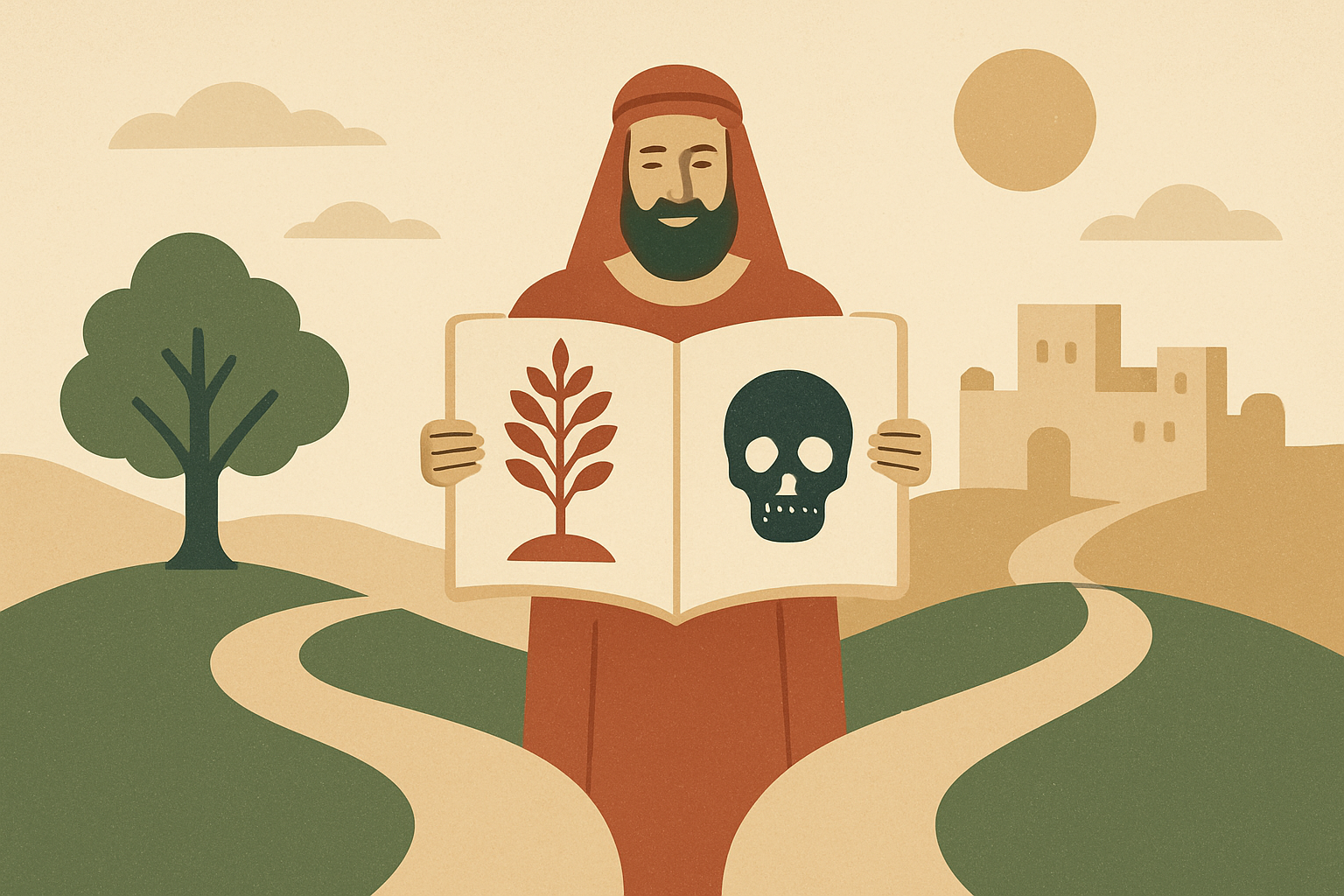
This week, in Parashat Re’eh, Moshe stands before the people and presents a clear choice: "See, I set before you today a blessing and a curse." The blessing will come if they obey God's commandments, and the curse if they turn away and follow other gods. When the Israelites enter the land, they are to proclaim the blessing on Mount Gerizim and the curse on Mount Ebal. God instructs them to destroy all places of idol worship, break their altars, and erase their names from the land. The Israelites are told not to worship God in the same way as the nations they are dispossessing, but to seek out the special place that God will choose for His name, where they are to bring their offerings, sacrifices, tithes, and firstborn animals. They are not to offer sacrifices anywhere they wish, but only at the place God will choose. However, they may slaughter animals for meat in their own towns, as long as they do not consume the blood, which must be poured out on the ground.
God warns the people not to imitate the practices of the nations, especially not to eat blood or offer their children as sacrifices. The Israelites are told to bring their tithes, offerings, and vows to the chosen place, and to rejoice there with their families and the Levites. If the distance is too great, they may exchange their offerings for money, travel to the chosen place, and use the money to buy whatever they desire to eat there in celebration. They are reminded not to neglect the Levites, who have no land inheritance.
When the Israelites settle in the land, if they wish to eat meat, they may do so freely, but again, they must not eat the blood. They are also told to set aside a tithe of their produce each year and bring it to the chosen place to eat in God's presence. Every third year, the tithe is to be given to the Levite, the stranger, the orphan, and the widow in their towns, so that everyone will have enough to eat.
God warns the people about false prophets or dreamers who may perform signs or wonders and try to entice them to follow other gods. Even if the sign comes true, they must not listen to such a person, for God is testing them. Such a prophet or dreamer must be put to death. Similarly, if a close relative or friend secretly tries to entice someone to worship other gods, that person must not listen or show pity, but must be punished. If an entire city turns to idolatry, the city and its inhabitants must be destroyed, and nothing from it may be kept.
The Israelites are reminded not to cut themselves or make bald spots for the dead, as they are a holy people to God. They are given a list of kosher and non-kosher animals, fish, and birds, and are told not to eat anything that dies on its own. They may give it to a stranger or sell it to a foreigner, but they themselves must not eat it. They are also told not to cook a young goat in its mother's milk.
The laws of tithing are repeated: every year, a tenth of the produce is to be set aside and eaten at the chosen place. Every third year, the tithe is to be given to the Levite, the stranger, the orphan, and the widow. The laws of the Sabbatical year are introduced: every seventh year, all debts are to be canceled. The Israelites are encouraged to be generous and lend to the poor, even as the Sabbatical year approaches, and not to harden their hearts or close their hands. If a fellow Hebrew is sold as a slave, he or she is to be set free in the seventh year, and not sent away empty-handed, but provided with gifts from the flock, threshing floor, and winepress. If the slave chooses to stay, a ritual is performed to mark this decision.
The parasha concludes with laws about dedicating firstborn animals to God, eating them at the chosen place, and not working with or shearing them. The Israelites are reminded to observe the three pilgrimage festivals: Pesach, Shavuot, and Sukkot. Each festival has its own specific instructions: Pesach is to be celebrated with unleavened bread for seven days, with the Passover offering eaten at the chosen place; Shavuot is to be celebrated with freewill offerings and rejoicing; Sukkot is to be celebrated for seven days with joy, including everyone in the community. All males are to appear before God at the chosen place three times a year, and no one should come empty-handed, but each should bring a gift according to his means.
One of the most powerful ideas in this parasha is the concept of free choice. The Torah emphasizes that each person is given the opportunity to choose between blessing and curse, good and evil. This is not just a one-time decision, but a constant process of choosing, every day and in every situation. The Torah teaches that our actions have real consequences, and that we are responsible for the choices we make. This idea empowers us to take ownership of our lives and to strive for holiness, knowing that we have the ability to shape our destiny through the decisions we make. The call to choose is both a challenge and a gift, reminding us that we are partners with God in creating a meaningful and purposeful life.
Created by Rabbi Ari (AI)