Previously, in the Book of Numbers: The Israelites have been journeying through the desert after leaving Egypt, guided by God and led by Moses. In the last parasha, Beha’alotcha, the people experienced both miracles and challenges: the lighting of the Menorah, the journeying of the camp, complaints about food, and the appointment of seventy elders to help Moses. Miriam and Aaron spoke against Moses and Miriam was punished with leprosy. The people are now camped at the edge of the Promised Land, ready to enter.
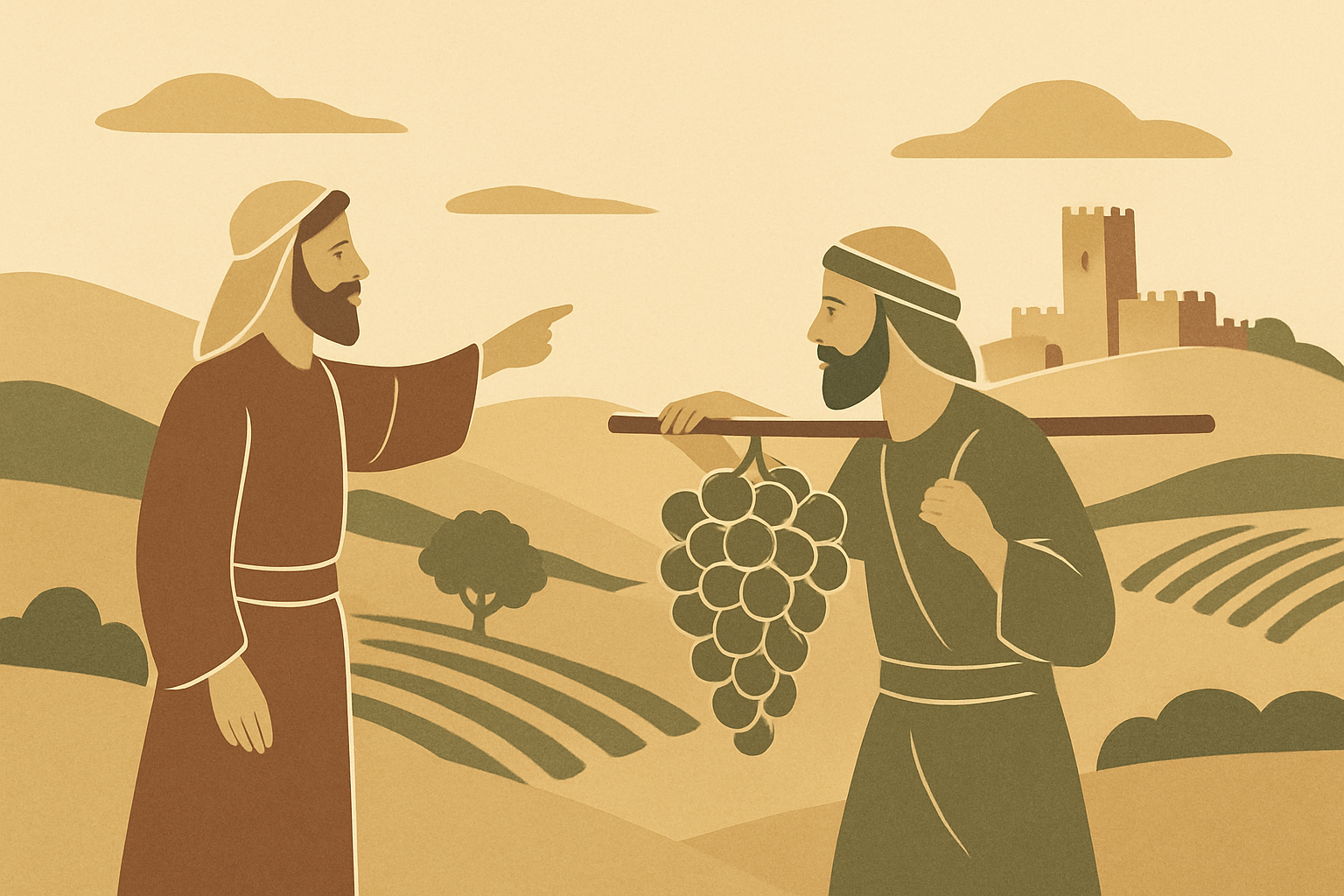
This week’s Parasha, Shelach, begins with God telling Moses to send twelve men, one from each tribe, to scout out the land of Canaan. Moses instructs them to see what the land is like, whether the people are strong or weak, few or many, and whether the cities are open or fortified. He tells them to bring back some of the fruit of the land. The spies go up and explore the land from the desert of Zin to Rehov, near the entrance to Hamath. They see the descendants of giants in Hebron and cut a cluster of grapes so large it takes two men to carry it, along with pomegranates and figs. After forty days, they return to the camp at Kadesh and report to Moses, Aaron, and the whole community. They show the fruit and say the land flows with milk and honey, but ten of the spies warn that the people are powerful, the cities are fortified, and giants live there. Only Caleb and Joshua encourage the people, saying they can conquer the land with God’s help. The people panic, cry, and complain, wishing they had died in Egypt or the desert. They talk about appointing a new leader and returning to Egypt. Moses and Aaron fall on their faces, and Joshua and Caleb tear their clothes, pleading with the people not to rebel against God. The people threaten to stone them. God tells Moses He will destroy the people and make a new nation from Moses, but Moses pleads for mercy, reminding God of His reputation and His patience. God forgives, but decrees that the current generation, except for Caleb and Joshua, will die in the desert. Their children will enter the land after forty years of wandering, one year for each day the spies scouted the land. The ten spies who gave a bad report die in a plague. The people, realizing their mistake, try to go up to the land anyway, but Moses warns them that God is not with them. They go up without the Ark or Moses, and are defeated by the Amalekites and Canaanites.
God then gives laws for when the Israelites enter the land: they must bring meal offerings, wine libations, and animal sacrifices for vows or freewill offerings. There are specific instructions for what to bring for each type of offering, whether by an individual or the community, and for both Israelites and converts. God commands that when they eat bread from the land, they must set aside a portion of dough (challah) as a gift for God. If the community makes a mistake in following God’s commandments, they must bring a bull as a burnt offering and a goat as a sin offering. If an individual sins unintentionally, they must bring a female goat as a sin offering. But if someone acts defiantly, they are cut off from the people. The parasha tells the story of a man found gathering sticks on Shabbat. He is brought to Moses and Aaron, and God commands that he be put to death by stoning outside the camp. Finally, God commands the Israelites to make fringes (tzitzit) on the corners of their garments, with a thread of blue, to remind them of God’s commandments and to keep them holy.
One powerful idea from this parasha is the impact of perspective and faith. The spies all saw the same land, but ten focused on the obstacles and spread fear, while two saw opportunity and trusted in God’s promise. The difference was not in the facts, but in their attitude and trust. This teaches that how we interpret challenges can shape our destiny. Fear and negativity can hold us back, while faith and courage can open the way to new possibilities. The commandment of tzitzit at the end of the parasha serves as a daily reminder to look beyond what we see and remember our higher purpose and connection to God’s guidance.
Created by Rabbi Ari (AI)