Last week, in Parashat Devarim, Moshe began his final speeches to the Israelites, reminding them of their journey through the desert, their mistakes, and the lessons learned. He recounted the appointment of judges, the sending of the spies, and the consequences of their lack of faith, which led to wandering in the wilderness for forty years. Moshe also described the recent victories over Sihon and Og, and how the land east of the Jordan was given to the tribes of Reuven, Gad, and half of Menashe. These stories set the stage for this week’s Parasha, where Moshe continues to prepare the people for entering the Land of Israel, emphasizing the importance of loyalty to God and the Torah.
In Parashat Va’ethanan, Moshe tells the people that he pleaded with God to let him enter the Promised Land, but God refused, telling him to view the land from a mountain and to encourage Yehoshua, who will lead the people instead. Moshe reminds the Israelites to listen to the laws and commandments he is teaching them, not to add or subtract from them, and to remember what happened at Baal Peor, where those who followed idolatry were punished. He stresses that the laws are their wisdom and understanding in the eyes of other nations, and that no other nation has a God so close or such just laws.
Moshe warns the people not to forget what they saw at Mount Sinai, where God spoke to them from the fire, and not to make any image or idol. He says that if they do, they will be exiled from the land, but if they seek God with all their heart and soul, they will find Him, even in exile. Moshe reminds them that they heard God’s voice but saw no form, and that God is unique—there is none besides Him. He tells them to remember the miracles in Egypt and at the sea, and that God chose them out of love for their ancestors.
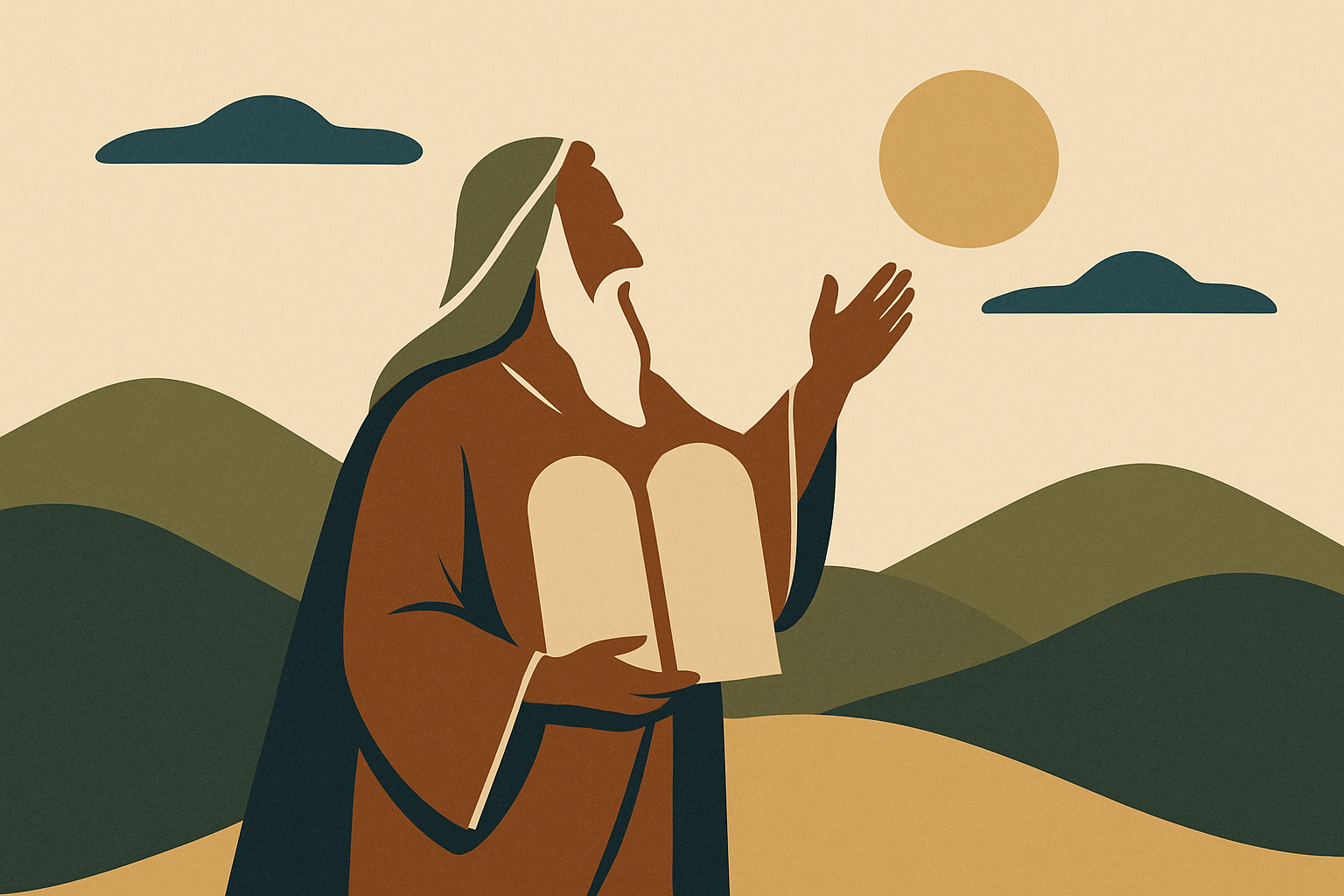
Moshe sets aside three cities of refuge east of the Jordan for someone who kills accidentally, so they can flee there for safety. He then repeats the Ten Commandments as they were spoken at Sinai: belief in God, not having other gods, not making idols, not taking God’s name in vain, keeping Shabbat, honoring parents, not murdering, not committing adultery, not stealing, not bearing false witness, and not coveting. Moshe describes how the people were afraid at Sinai and asked him to speak with God on their behalf, and God agreed, wishing that the people would always have such reverence.
Moshe teaches the Shema: “Hear, O Israel, the Lord is our God, the Lord is One.” He commands the people to love God with all their heart, soul, and might, to teach these words to their children, to speak of them at home and on the road, to bind them on their hands and between their eyes, and to write them on their doorposts and gates. Moshe warns them not to forget God when they enter the land and enjoy its abundance, not to follow other gods, and to remember the miracles God did for them. He tells them to teach their children about the Exodus and the giving of the Torah, and to keep God’s commandments, decrees, and laws for their own good and to ensure a long life in the land.
One powerful idea from this Parasha is the emphasis on memory and transmission. The Torah insists that the experience at Sinai and the knowledge of God’s unity are not just for those who were present, but must be passed down through every generation. The Shema, with its call to love God and teach His words to children, highlights the responsibility of each person to be both a student and a teacher. The act of remembering—through words, rituals, and daily actions—creates a living chain that connects the past, present, and future. This ongoing transmission is what keeps faith alive and ensures that the values and teachings of the Torah remain at the heart of Jewish life, no matter where or when the people find themselves.
Created by Rabbi Ari (AI)