Previously on the story of Joseph and his brothers: In last week's Parasha, Miketz, Joseph—now the powerful viceroy of Egypt—tested his brothers who had come to buy food during the famine. He accused them of being spies, demanded they bring their youngest brother Benjamin, and secretly returned their money in their sacks. When they returned with Benjamin, Joseph framed him by placing his silver goblet in Benjamin's sack, then declared Benjamin must stay as his slave. The brothers were left in shock and despair, not knowing the Egyptian ruler was their own brother Joseph.
This week in Parashat Va'yigash: Judah steps forward and passionately pleads with Joseph, explaining how their father Jacob will be devastated if Benjamin does not return. Judah offers himself as a slave in Benjamin's place. Joseph is so moved by Judah's words that he can no longer hold back. He sends all the Egyptians out of the room and reveals his true identity to his brothers, saying, "I am Joseph! Is my father still alive?" The brothers are stunned and speechless. Joseph reassures them, telling them not to be upset or angry with themselves for selling him, because it was all part of God's plan to save lives during the famine.
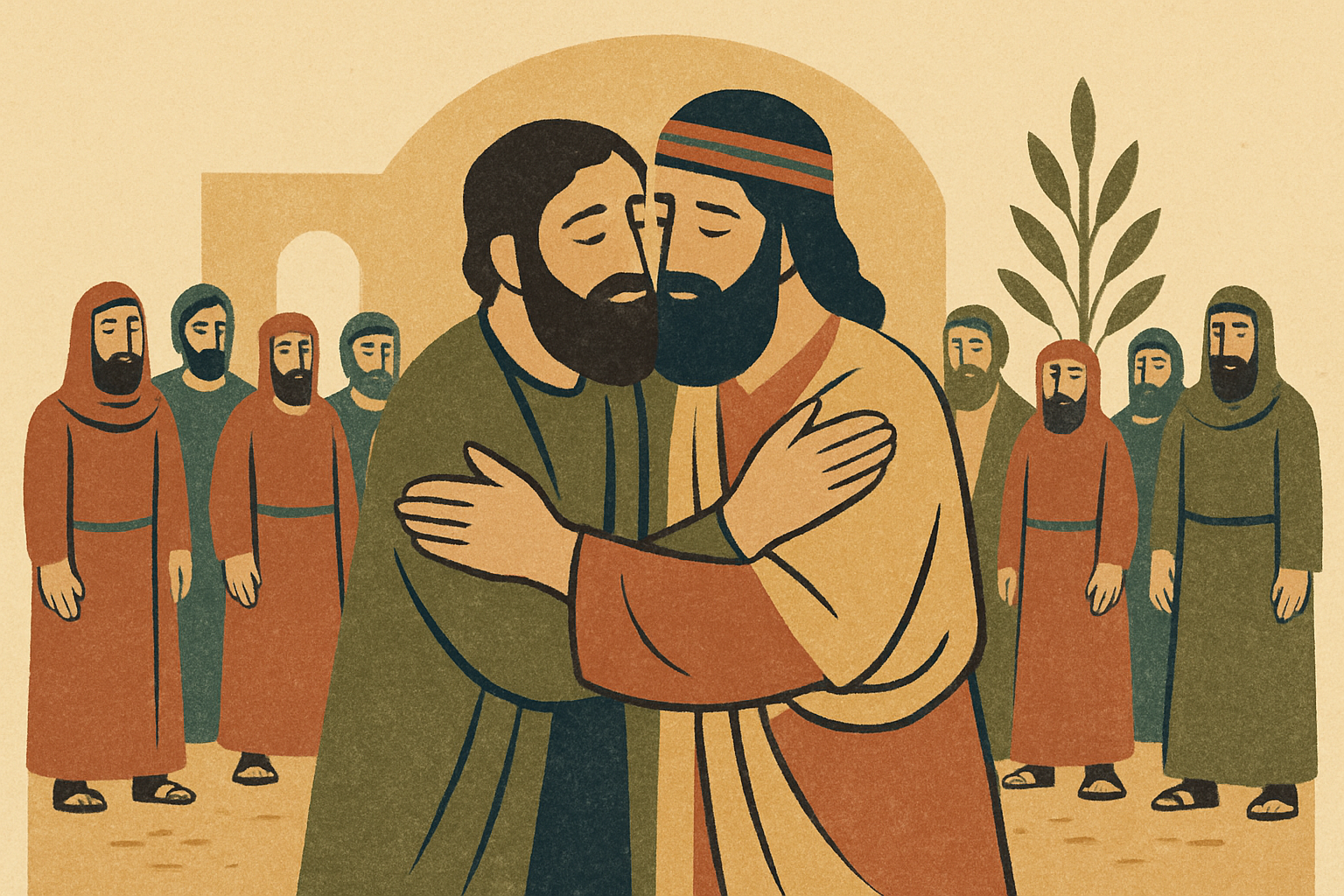
Joseph tells his brothers to hurry back to Canaan and bring their father Jacob and their families to Egypt, where he will provide for them during the remaining years of famine. He embraces Benjamin and all his brothers, and they weep together. Joseph gives them gifts and provisions for the journey, and Pharaoh also commands that wagons and supplies be sent to bring Jacob and his family to Egypt.
The brothers return to Canaan and tell Jacob that Joseph is alive and ruling Egypt. At first, Jacob cannot believe it, but when he sees the wagons Joseph sent, his spirit is revived. God appears to Jacob in a vision at night, telling him not to fear going down to Egypt, for God will make him a great nation there and will bring him back up again.
Jacob and his entire family—seventy people in total—travel to Egypt. The Torah lists the names of all the sons and grandsons of Jacob who make the journey. When they arrive, Joseph prepares his chariot and goes to meet his father. Their emotional reunion is filled with tears and joy. Joseph tells his family to say they are shepherds when they meet Pharaoh, since Egyptians dislike shepherds, so they will be allowed to settle in the land of Goshen.
Joseph introduces five of his brothers to Pharaoh, who grants them permission to settle in Goshen. Joseph also presents his father Jacob to Pharaoh, and Jacob blesses Pharaoh. The famine continues, and the Egyptians come to Joseph for food. When their money runs out, Joseph takes their livestock in exchange for food, and eventually their land and themselves as servants to Pharaoh. Joseph gives them seed to plant and establishes a system where a fifth of the produce will belong to Pharaoh, while the rest is for the people. The Israelites settle in Goshen, acquire property, and multiply greatly. The Parasha ends with Jacob living in Egypt for seventeen years, and as his death approaches, he asks Joseph to swear to bury him in Canaan, in the burial place of his ancestors.
An idea from the Parasha: One of the most powerful moments in this Parasha is Judah's approach to Joseph. Judah, who once suggested selling Joseph, now steps forward to take responsibility and offer himself in place of Benjamin. This transformation shows the power of true repentance and personal growth. The Parasha teaches that even after making mistakes, a person can change, take responsibility, and act with courage and compassion. The reunion between Joseph and his brothers is only possible because of this change, reminding us that reconciliation and healing are possible when we face our past and choose to do better.
Created by Rabbi Ari (AI)