Sukkot, the "Festival of Booths," invites us to step outside the comfort of our homes for seven days, fulfilling the biblical commandment:
The central commandment of the Sukkot festival is to construct and dwell in a temporary shelter for seven days. This structure, variously called a hut, shack, or booth (sukkah in Hebrew), serves as a reminder of our ancestors' journey through the desert following the Exodus from Egypt. During that time, they lived in fragile dwellings, relying solely on God's protection. This collective memory plays a formative role in Jewish identity.
On a personal level, the sukkah often evokes beautiful memories of celebrating with family and friends, with warmth and tradition. On the national level, it serves as a powerful reminder of Jewish history - the journey of a people through the desert towards the Promised Land. This dual significance, both personal and communal, imbues Sukkot with a rich, multifaceted meaning that resonates across generations
Sukkot is not just a historical commemoration but also an agricultural celebration, marking the final harvest of the year. As we gather the bounty of the land, we give thanks to God for His abundant blessings. The festival is also deeply rooted in the spirit of hospitality. On a practical level, we visit family and friends in their sukkot and invite them to be guests in ours. Symbolically, we welcome the ushpizin, honored Biblical figures like Abraham, Isaac, Jacob, Joseph, Moses, Aaron, and King David, each one symbolically invited for one of the seven days of the festival.
A key tradition of Sukkot is the waving of the Four Species: the etrog (citron), lulav (palm branch), hadassim (myrtle), and aravot (willow). These species, each with their own unique characteristics, symbolize the diversity and unity of the Jewish people. Waving them in all directions affirms God's presence everywhere and reminds us that our strength as a people lies in our unity, embracing our differences.
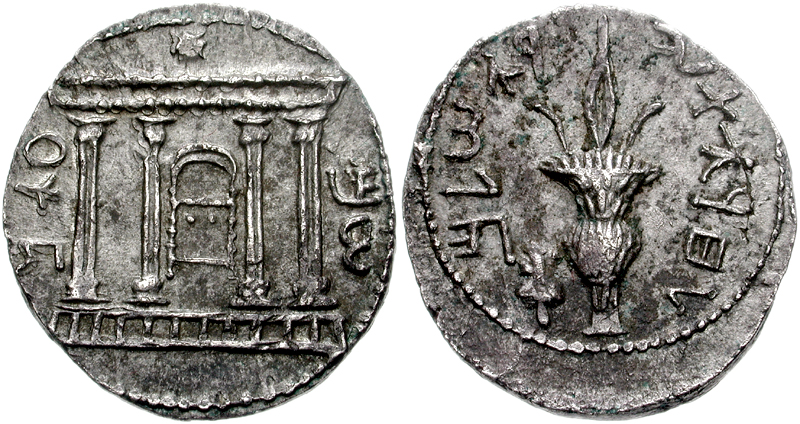
During the Bar Kokhba Revolt (132–135 CE), the Four Species were engraved on silver coins minted by the Jewish rebels. Despite the harsh reality of war, these coins symbolized the enduring hope of the Jewish people for spiritual and national redemption. Today, as Israel again faces difficult days of conflict, we are reminded of the timeless prayer from the evening service: “Spread over us the Sukat Shlomecha—the shelter of Your peace—on us, on all Israel, and upon Jerusalem.”
Below is a picture of one of these ancient coins, showing the lulav and etrog—symbols of faith, resilience, and strong hope for peace and protection.